How to Freeze Cooked Food for Future Plate Sales
Freeze cooked food for future plate sales with a safe batch release, tested packaging, a freezer-capacity check, inventory records, and a thaw plan.
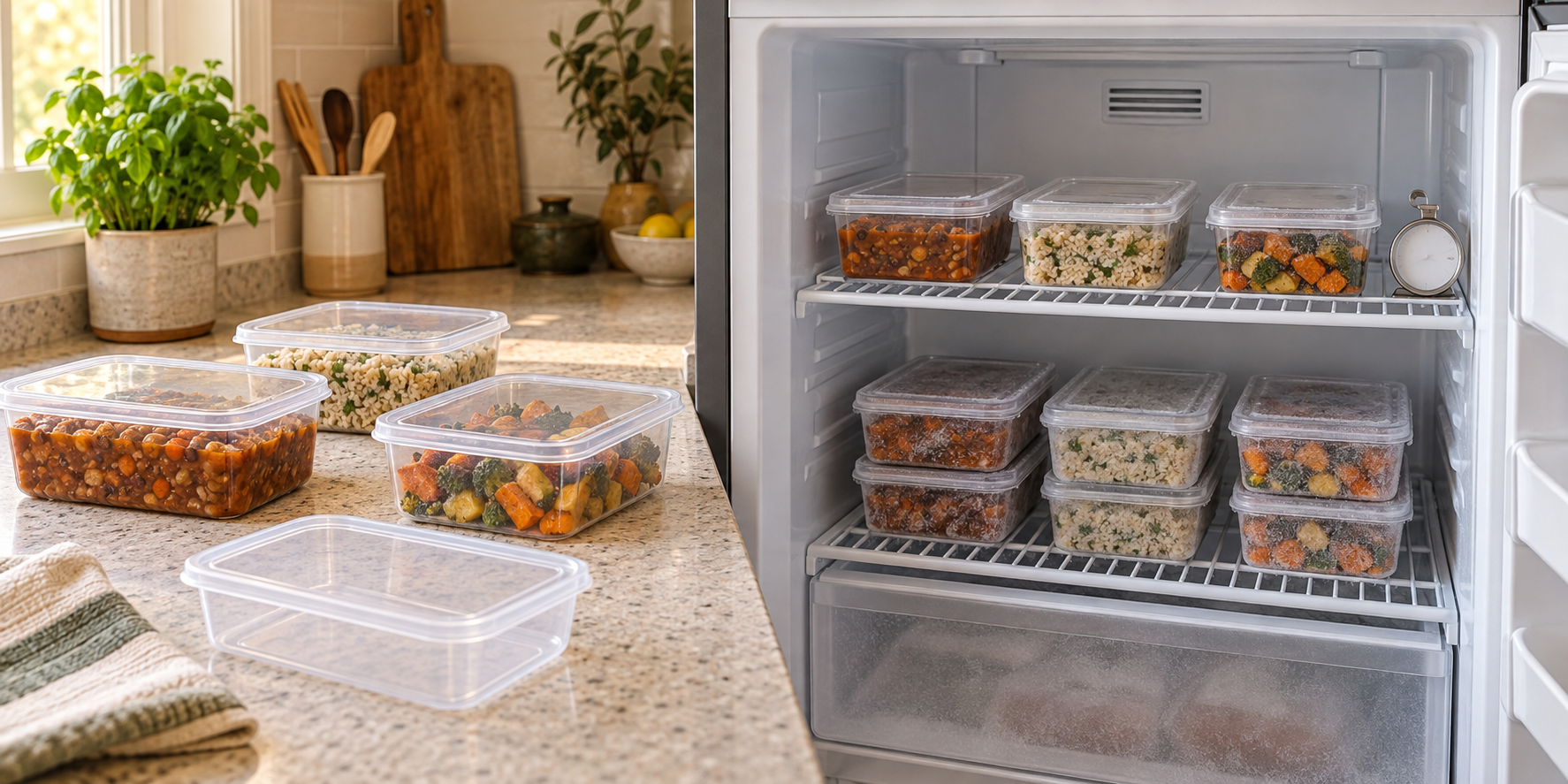
A cooked batch can pass its final temperature check and still become a poor frozen product. A deep container may freeze slowly, a lid may leak as sauce expands, or a full freezer may struggle when twenty warm-looking packages arrive at once. Freezing also cannot repair food that was cooked, cooled, or handled unsafely.
This guide will help you build a freeze gate between production and frozen storage. You will decide whether the process is allowed, release only a verified batch, test the finished dish, package it in sale-sized units, prove the freezer can handle the load, and connect every frozen portion to a planned thaw or reheat step.
Confirm the product and process are allowed
Start with the authority that regulates your operation. The FDA’s food-business overview explains that requirements depend on the product, facility, and federal, state, and local jurisdiction. A home kitchen that may sell shelf-stable baked goods is not automatically allowed to prepare, freeze, store, and sell meals that need temperature control.
Ask your state or local regulator specific questions before advertising the item:
- May this cooked product be prepared and frozen in the facility I use?
- Must it be sold frozen, thawed under control, or reheated before handoff?
- Which cooling, storage, labeling, date-marking, and record rules apply?
- Does my freezer need approval, dedicated space, or monitored temperatures?
- May a customer reheat the food, and what instructions must travel with it?
The FDA Food Code is a model used by jurisdictions, not a promise that the same rule applies everywhere. Write the controlling requirements into your process. If the regulator does not permit the product or your equipment cannot meet the conditions, do not add it to the menu.
Release the cooked batch before freezing it
Treat freezing as a storage step, not a rescue step. USDA explains that freezing makes microorganisms inactive rather than destroying them. Once food thaws, surviving microbes can become active again. That means a batch with an unknown cooking check, failed cooling record, contamination concern, or unresolved allergen mistake does not become acceptable because it turns solid.
Create a short release check for every cooked batch:
- The recipe version and ingredient record match what was produced.
- Required cooking checks passed.
- The batch followed the approved cooling method and checkpoints.
- Containers, utensils, and handling stayed within your sanitation and allergen controls.
- The finished yield matches the quantity entering frozen inventory.
If cooling is the weak link, repair that process with the batch-cooling workflow before adding a freezer step. Do not guess when a cooling record is incomplete.
Decide whether the dish deserves a freezer slot
“Safe to freeze” and “good enough to sell after freezing” are different decisions. USDA notes that some foods remain safe but lose texture or separate after thawing. The FoodSafety.gov cold-storage chart also gives different quality windows by food type and identifies prepared foods that do not freeze well.
Run a complete quality trial with the actual recipe, portion, package, freezer, thaw method, and reheat method you plan to use. Inspect:
- texture of rice, pasta, potatoes, vegetables, and sauces;
- separation, water release, dryness, or freezer burn;
- whether a dense portion thaws and reheats evenly;
- lid fit and leakage before and after freezing;
- flavor and appearance at the end of your proposed quality window.
Write the result on the recipe record. A dish that becomes watery or reheats unevenly may need a recipe change, a smaller portion, components frozen separately, or removal from the frozen menu. The goal is not to make every dish freezeable. It is to sell only the versions that stay safe, recognizable, and worth buying.
Pack sale-sized units for the freezer
Package the amount you expect to thaw or sell at one time. Smaller units generally freeze faster and prevent you from thawing a large container just to remove a few portions. University of Minnesota Extension recommends airtight, freezer-suitable packaging and notes that liquids need room to expand.
Choose a package whose supplier confirms the intended use. “Food safe” alone does not prove that a container tolerates freezing, reheating, or both. Use the takeout-container test to check the base, lid, seal, stacking, transport, and planned heating method.
For each unit:
- use the same measured portion used in your recipe and price;
- keep the food shallow enough for the tested process;
- leave the package’s required expansion space for soups and sauces;
- close the lid completely and remove excess air when the packaging method allows;
- keep the outside clean and dry before it enters storage.
Do not improvise with a random deli cup, thin household bag, or glass jar that was not designed for the temperature change. A failed package loses food, freezer space, and the batch identity you worked to preserve.
Prove the freezer can handle the real load
USDA recommends frozen storage at 0°F or below, verified with an appliance thermometer. It also advises spreading new packages in one layer rather than stacking them until frozen solid. University of Minnesota Extension warns that overloading a home freezer with unfrozen food slows the freeze and tells users to follow the appliance manual’s loading guidance.
Turn those principles into a capacity test:
- Start with the freezer holding its normal inventory at your required temperature.
- Load the same number, size, and spacing of cooked portions planned for a sale.
- Put new units in the tested cold area with air gaps; do not build a warm center by stacking them.
- Record the appliance temperature before loading and at the intervals required by your process.
- Confirm the packages freeze as expected without pushing existing stock out of range.
- Repeat if a different menu, portion depth, shelf position, or batch size changes the load.
The result is a freezer cap, not a guess. If twelve portions pass and twenty-four crowd the shelves, twelve is the limit until you change the equipment or production plan. A sold-out preorder list should never decide freezer capacity after cooking begins.
Give every frozen unit a useful identity
A clear frozen-inventory record connects the package to its history and next step. Keep the food name, internal batch ID, frozen date, quantity, storage location, allergen status, intended quality-use date, and approved thaw or reheat method. Preserve any information your regulator requires on the package or accompanying label.
Use the ingredient and batch traceability workflow so a supplier notice can lead you to the exact frozen units and fulfilled orders. Rotate stock by the tested quality date, but never let a first-in, first-out habit override a recall hold, damaged package, temperature concern, or failed record.
Published freezer times are not one universal sale deadline. They assume continuous frozen storage and are usually written as quality guidance. Set a conservative product-specific date from official guidance, your regulator’s requirements, and your own end-of-window quality trial. Review older inventory before producing more; the freezer should not become a place where uncertain leftovers disappear.
Work through one 24-portion example
Suppose a seller wants to freeze 24 portions of fully cooked stew for a future menu. This is an example, not a universal batch size.
The seller first confirms the product and process with the regulator. The standardized recipe, cooking record, and cooling log all pass. A test portion frozen in the intended container keeps its texture, the sauce has room to expand, and the approved reheating method heats it evenly.
The loaded-freezer test shows only 12 new containers can sit in a single layer without crowding. The seller therefore divides production into two controlled freeze loads rather than stacking all 24 at once. Each group keeps the same batch ID but records its own load time and freezer check. After the first group is frozen solid and moved to its assigned inventory zone, the second group enters the tested shelf positions.
That decision may extend the production schedule or reduce the preorder cap. It is still better than discovering after cooking that the freezer has nowhere safe and effective to put the food.
Plan how the food will leave frozen storage
Freezing is incomplete until the exit route is written. Decide whether the product will be transferred to controlled refrigerator thawing, reheated from frozen with a validated method, or handed to the customer frozen where that sale is allowed. USDA’s leftovers guidance describes safe thawing routes and notes that suitable foods can be reheated from frozen, though the process takes longer.
Use the site’s detailed thawing plan and batch-reheating workflow for those separate controls. If customers reheat the meal, test the exact package and instructions yourself, then provide directions that match the approved product and equipment assumptions. Do not promise that one time works for every microwave or portion.
Before the next sale, run this eight-point freeze check:
- the product and process are allowed;
- the cooked and cooled batch is released;
- the thawed quality trial passes;
- the package is approved and tested for its intended uses;
- the portion and expansion space are consistent;
- the real freezer load stays at the required temperature;
- every unit links to a batch, quality date, and storage location;
- the thaw, reheat, or frozen handoff route is already written.
If one point is missing, hold the menu item and repair the process first. For help connecting recipes, capacity, records, and sale-day decisions into one operating system, the Selling Plates guide can help you build the wider workflow around this freeze gate.
Ready to move?
Turn the research phase into your first sale.
The guide brings pricing, menu planning, marketing, and setup into one clear playbook.
Get the guide on Gumroad