How to Get Your First 10 Plate-Sale Customers
Get your first 10 plate-sale customers with a focused local offer, personal outreach, community partners, one order path, and a simple tracker.
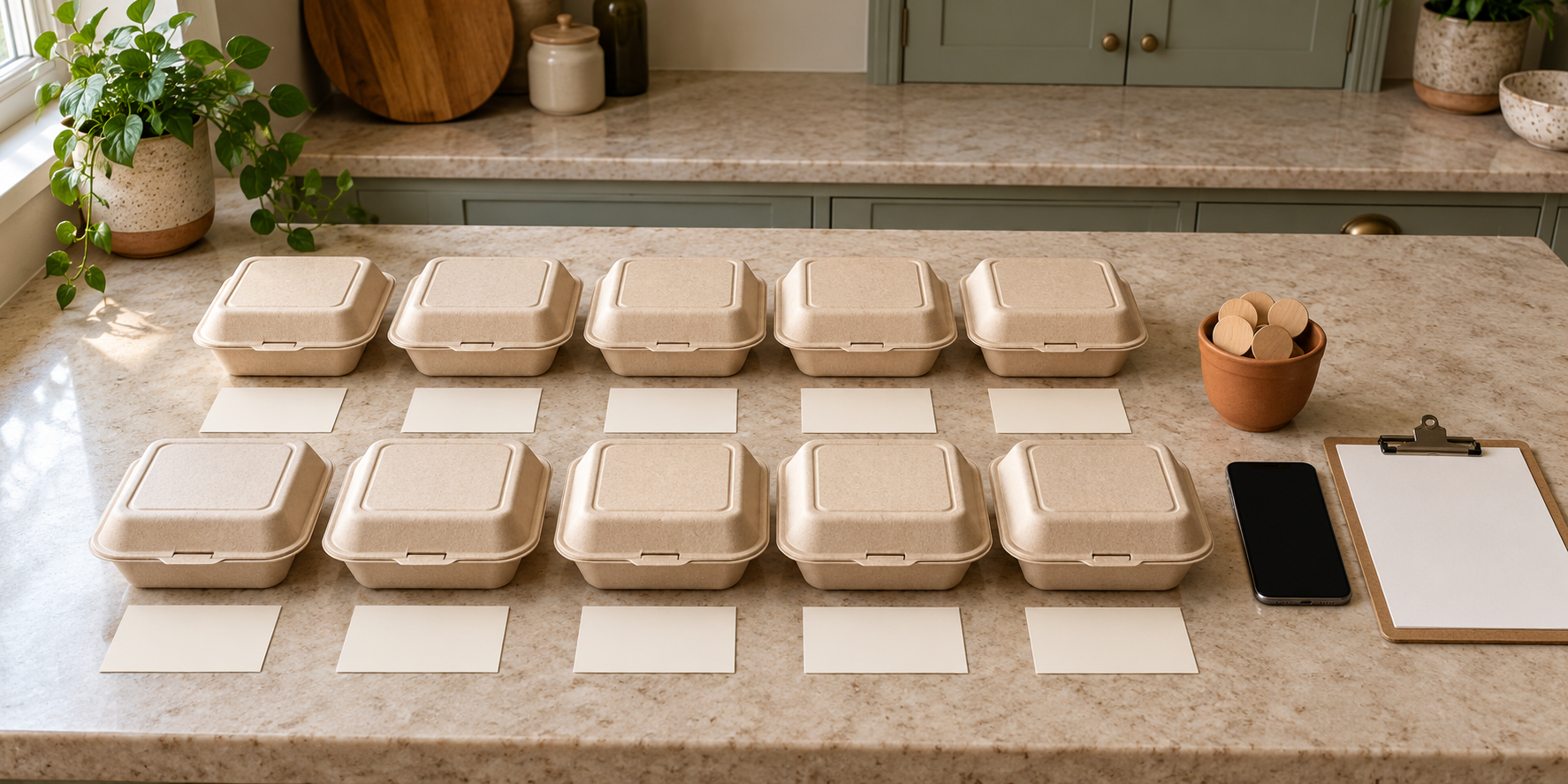
Your first customers do not have to come from a large following. They can come from a small group of nearby people who understand one specific offer, trust the way you present it, and have a simple way to pay before your order cutoff.
This guide will help you build that first group deliberately. You will define what counts as a customer, choose one buyer and meal occasion, make a short prospect list, send personal invitations, use community connections without spamming, and track where interest turns into payment. The goal is ten separate paying customers—not ten likes, ten plates, or ten promises to order later.
Make “first 10 customers” a countable goal
Write the finish line before contacting anyone. For this sprint, count one customer when one separate person completes payment for an order you have accepted. If one person buys three plates, that is three plates and one customer. A free taster, an unpaid reservation, and a repeat order from the same buyer do not increase the customer count.
That definition keeps attention on a useful milestone while preserving the numbers your kitchen actually needs. Track customers, paid orders, and plates in separate columns. Stop accepting orders when you reach the smaller of your tested production cap or the advertised quantity, even if the customer count is below ten.
This article assumes you have already confirmed that the offer is allowed, tested the menu, set a sustainable price, and chosen a manageable capacity. If those pieces are not ready, use the first plate-sale planning guide before opening the sprint. Demand never replaces permission or kitchen capacity.
Choose one buyer, occasion, and complete offer
“People who like food” is too broad for a useful invitation. Choose a person, a local area, and the moment your plate solves. For example: hospital staff collecting Friday dinner after an evening shift, parents near one pickup point who want a Saturday family meal, or neighbors who already ask when you are cooking a particular regional dish.
The SBA’s current market-research guidance recommends examining demand, customer location, competing options, and the prices people already pay. Use that as a short filter rather than a large research project. Ask:
- Who can realistically collect or receive this meal?
- What occasion makes the offer useful now?
- What would that person buy instead?
- Is the real price reasonable for that complete alternative?
Then write one offer card with the meal and included sides, price, order cutoff, sale date, handoff window, pickup area or delivery boundary, quantity cap, payment rule, and one order link or instruction. Check it against the clear menu-description workflow.
The FTC’s small-business advertising guide explains that express and implied claims should be truthful and supported. Show the actual portion, state the complete price, and remove unverified claims such as “healthiest,” “allergen-free,” or false scarcity. Your first buyers should not need a private conversation to discover a required fee, missing side, or inconvenient pickup time.
Build a thirty-name prospect worksheet
Ten is the customer goal, not a prediction about conversion. Build a working list of thirty plausible people and routes so the sprint does not depend on one post reaching strangers. Thirty is an editorial planning number, not an industry benchmark; use a smaller or larger list when your community and capacity call for it.
Divide the worksheet into three lanes:
- Warm prospects: people who know your cooking and fit the buyer and handoff plan. Do not include every contact on your phone.
- Community prospects: people you can legitimately reach through a workplace, faith community, school-parent network, neighborhood channel, or local group whose rules allow business offers.
- Connectors: owners or organizers with an audience that overlaps yours, such as a barber, salon, fitness coach, child-care provider, office coordinator, or community host.
Record the person or route, why the offer may fit, permission status, contact date, response, and next action. Do not buy a scraped list, add people to a recurring text thread without consent, or expose everyone’s phone number in a group message.
Invite warm prospects one at a time
Begin with the people most likely to understand the offer. A personal invitation should explain why you thought of that person, give the complete order facts, and make “no” easy.
For example:
Hi Maya—I’m opening a small Friday dinner pickup near Oak Street. It’s a jerk chicken plate with rice and peas, cabbage, and sauce for $16, with orders closing Wednesday at 7 p.m. I thought of you because you mentioned needing an easy Friday dinner. Here is the order page if it fits; no pressure if it does not.
Change the details to match the real offer. Send the order route with the first message so an interested person can act without waiting for another reply. Do not ask friends to claim they bought the meal, post praise they have not earned, or create public urgency for you.
Follow up once only when the person has not replied and the cutoff is approaching. A short “Just closing the list tonight; sharing once more in case you meant to order” is enough. Mark no response and move on rather than turning a relationship into a sales sequence.
Borrow local reach with permission
Next, ask connectors and community hosts for permission to share the offer. Lead with relevance and the exact request: one staff message, one approved group post, a few cards at the counter, or a mention in a scheduled community update. Give the host the complete offer card instead of asking them to invent the wording.
Try:
I’m offering a capped Saturday family-meal pickup for customers in this area. Would one post in your member group fit the promotion rules? I can send a complete image, price, cutoff, pickup area, and order link. No worries if business posts are not a fit.
Use channels where you have a legitimate connection, and follow the moderator’s rules. The broader local plate-sale marketing guide covers an ongoing menu-drop campaign; for this sprint, one relevant share is more useful than copying the same advertisement into every local group.
An eligible Google Business Profile may also help suitable local customers find a real business, but it is not a universal tactic. Google says a profile generally requires in-person customer contact and that delivery-only food services have additional conditions. Check the current eligibility rules first. If you do not serve customers at your home address, Google’s service-area guidance says to remove that address from the public profile and use an accurate service area instead.
Move every “yes” into one paid order path
Interest is not inventory. When someone asks for a plate, send the same order route every other customer receives. The page or form should capture the exact item, quantity, handoff choice, contact method, and payment state, then stop taking orders at the real cap.
Use the simple online ordering path if you need to create that customer-facing route. Behind it, the weekly preorder system separates requested, awaiting-payment, paid, canceled, and fulfilled orders.
Do not count “save me two” as a sale unless your stated rules genuinely reserve unpaid orders. Reply with a friendly deadline: “I can hold the order through 6 p.m.; it is confirmed when payment is complete.” Then update the central record rather than relying on the message thread.
Track the funnel, not just the final ten
The SBA’s marketing-plan guidance recommends defining the customer’s buying steps and measuring which marketing work produces revenue. Use five stages for this sprint:
| Stage | What counts |
|---|---|
| Reached | The complete offer was delivered through a permitted route |
| Replied | The person gave a meaningful response or question |
| Started | The person opened or began the order process |
| Paid | Payment completed and the order was accepted |
| Fulfilled | The correct order was handed off or delivered |
Record the source beside each paid customer. If warm invitations produce six customers and a workplace share produces four, you have a useful starting pattern. If a channel creates many questions but no payments, save the questions and inspect the offer or order path before blaming reach.
After fulfillment, you can ask a satisfied buyer whether they know one nearby person who would genuinely want the next menu. Keep that introduction separate from a public review request. If you give free or discounted food in exchange for a post or endorsement, the FTC says that material connection should be disclosed; do not trade benefits for hidden praise.
Run one seven-day first-customer sprint
Keep the first attempt bounded so you can learn from it:
- Day 1: lock the offer, cap, order link, and customer definition.
- Day 2: build and check the prospect worksheet.
- Day 3: invite the most relevant warm prospects individually.
- Day 4: ask connectors and approved community channels to share.
- Day 5: answer common questions by improving the offer card, not by creating different promises for each buyer.
- Day 6: send one final cutoff reminder to people who showed interest, then close at the stated time or capacity.
- Day 7: reconcile payments, confirm handoffs, and prepare only the accepted orders.
After the sale, count reached, replied, started, paid, and fulfilled. If the sprint stops below ten, identify the first weak stage. Few suitable people reached means the prospect list was too narrow. Replies without order starts suggest the offer is unclear or mismatched. Starts without payment point to buying friction, price resistance, or incomplete checkout. Paid orders that strain the kitchen mean the capacity needs work before more acquisition.
Your first ten customers are not proof that every future menu will sell. They are a clean first dataset: who bought, why the offer fit, how they found it, whether the order path worked, and whether you fulfilled what you promised. Start with one buyer and one occasion, write thirty plausible routes to that buyer, and send the first five personal invitations today.
Ready to move?
Turn the research phase into your first sale.
The guide brings pricing, menu planning, marketing, and setup into one clear playbook.
Get the guide on Gumroad