Can You Sell Hot Meals From Home? Check the Rules
Learn how to check whether you can sell hot meals from home by matching your exact menu, kitchen, location, and sales route to local rules.
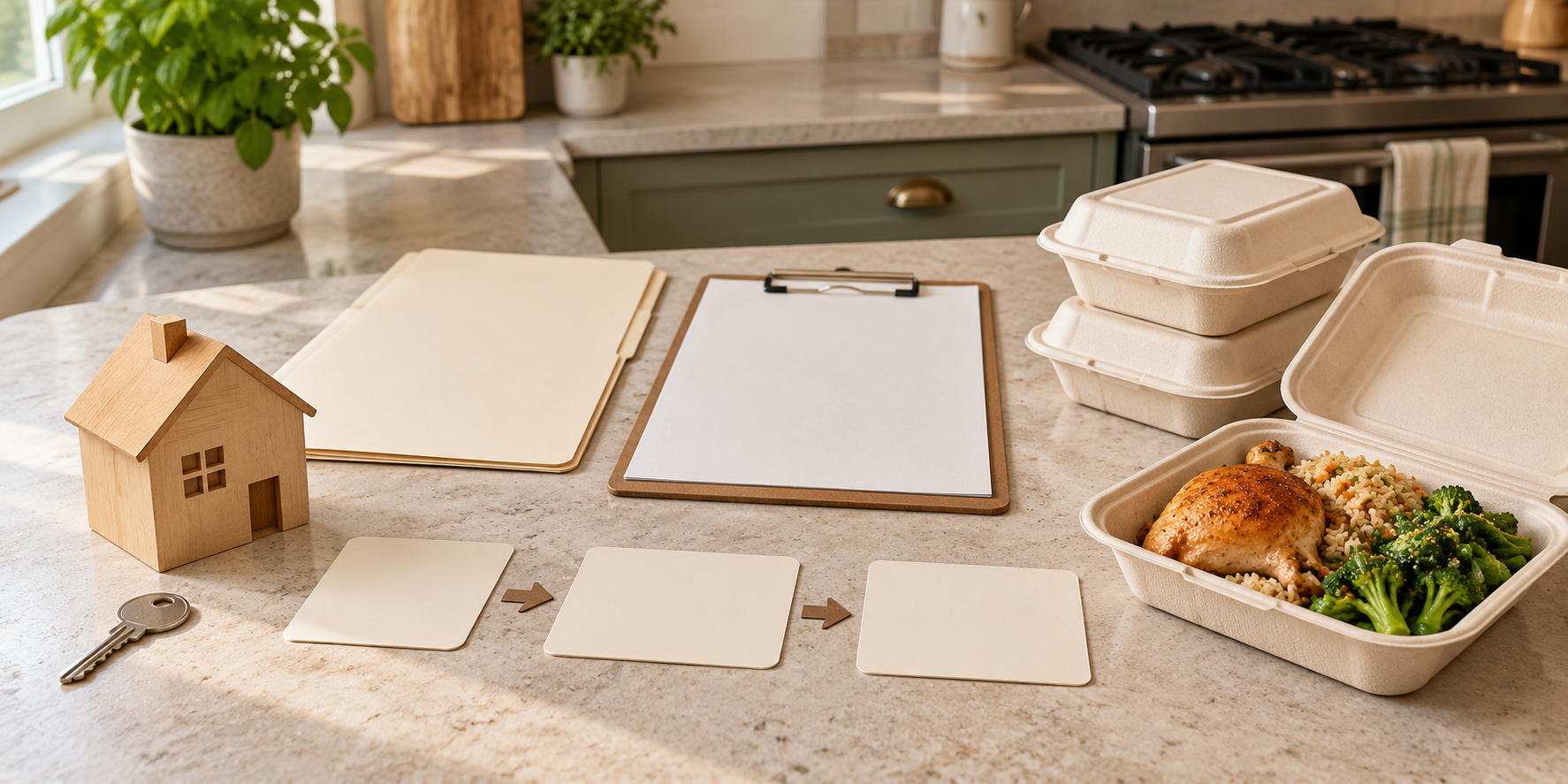
Can you sell hot meals from home? Sometimes—but only when the rules for your exact address allow your exact food, kitchen, and sales method. A neighbor’s bakery registration, a social-media seller’s menu, or a general cottage-food page cannot answer that question for a chicken plate, refrigerated side, or same-day dinner pickup.
This guide will help you find the authority that can answer, describe the proposed sale clearly, compare the legal routes that may exist, and save a decision you can rely on before advertising or accepting money. It is a research workflow, not legal advice or permission to operate.
Start with the honest answer: it depends on the whole offer
There is no single US license called “selling hot meals from home.” Requirements can change with the food, facility, location, and method of sale. The FDA’s food-business overview says licenses and permits may vary by product and facility and explains that retail food businesses are generally regulated by state and local government.
One detail often creates confusion: the FDA says a private residence is not required to register with the agency as a food facility. That exemption is not a permit to run any food business from a house. State, county, city, zoning, and program-specific rules can still control whether the proposed meal may be prepared there.
Before searching for an application, put the offer on one card:
- Food: every main, side, sauce, garnish, and drink you plan to sell.
- Kitchen: the address and whether it is a primary home kitchen, separate residential kitchen, shared kitchen, or commercial facility.
- Sale: preorder or walk-up, payment method, order volume, and whether food is sold directly to the final customer.
- Handoff: pickup, delivery, market, event, wholesale, or another route.
Change one part and the answer may change. “Vegetarian rice bowl for same-day pickup” is a more useful starting point than “hot food.”
Do not treat cottage food as a synonym for cooked meals
Cottage-food programs often focus on foods that meet a defined risk, shelf-stability, or product list. Other jurisdictions have a separate home-meal or microenterprise-kitchen program. A third may require food to come from a permitted commercial facility. These routes are not interchangeable.
Utah makes the distinction plainly. Its cottage-food program is limited to shelf-stable, low-risk, non-potentially hazardous foods and requires approval through inspection and registration. That route is not general permission to sell any dinner cooked at home.
California uses a different structure. Its microenterprise home kitchen operation requirements describe a permitted home-kitchen food facility that may prepare meals. But the route exists only where the city or county has adopted it, and the operator must apply through the local environmental health agency and meet the program’s limits and conditions.
The label on the program matters less than its current scope. Find the allowed-food list, prohibited-food list, facility definition, sales limits, and local authorization before deciding that your meal fits.
Use three state examples to see why shortcuts fail
The point of these examples is not to summarize every state’s law. It is to show why copying another seller’s answer can lead you in the wrong direction.
| Example | What the official source shows | What you still need to verify |
|---|---|---|
| Utah cottage food | The route is for shelf-stable, low-risk, non-potentially hazardous foods | Whether another approved facility or regulatory route fits the proposed meal |
| California MEHKO | A home-meal permit can exist, but only after local authorization and through the local environmental health agency | Whether the city or county participates and whether the exact menu and sales plan fit |
| Texas cottage food | Some temperature-controlled foods can qualify, while meat, poultry, seafood, and other named categories are excluded | Whether every ingredient fits, registration is required, and the handoff and labeling plan meet current conditions |
Texas is especially useful as a warning against old summaries. Current Texas cottage-food guidance reflects changes effective in 2025: some foods requiring temperature control may be sold through the program, but major categories are excluded and extra registration, handling, labeling, and distribution conditions apply. “Texas allows hot food” would therefore be too broad to guide a real menu.
Rules can change, and a state framework may leave decisions to local authorities. Use current official pages, not a social post, an undated list, or a seller in another county.
Follow the jurisdiction ladder for your address
Start with the agency that oversees retail food or home-produced food in your state. The FDA’s state retail-food directory links to state agencies and food codes across the country. From there, work down the ladder:
- State food authority: identify the possible category for the product and kitchen.
- County or city health authority: confirm which office regulates the exact address and whether a state-authorized local program has been adopted.
- Planning or zoning office: ask whether customer pickup, deliveries, signs, employees, traffic, or business activity are restricted at the residence.
- Business and tax offices: verify registrations, sales-tax treatment, and local business-license requirements separately from the food permit.
Do not assume one approval covers all four layers. A food program may allow the product while zoning restricts customer pickup. A business registration may allow the company to exist while saying nothing about where meals can be prepared.
Save the page that identifies the responsible office. If two agencies redirect you to each other, ask each one to name the code section, program, or authority that controls the decision.
Ask a question the regulator can actually answer
“Can I sell food from home?” hides the facts that determine the answer. Use a short written description instead:
I plan to prepare roasted chicken, rice, cooked vegetables, and a sealed sauce in my primary home kitchen at [address]. Customers would preorder and pay online, and I would offer direct pickup on Friday from 5:30 to 6:30 p.m. I expect no more than [number] meals per sale. Which food-business category applies, may this meal be prepared at this address, and which permit or approval is required before I advertise or accept payment?
Then ask six follow-up questions:
- Are any ingredients or processes outside the allowed scope?
- Must the kitchen be inspected, separated, or replaced with an approved shared facility?
- Are food-handler or manager credentials required?
- Are direct pickup and delivery both allowed?
- Which labels, customer notices, records, or plan documents are required?
- Does the city or county need a separate authorization, zoning clearance, or business license?
Ask for a link to the controlling program or application. A verbal “sounds fine” is not as useful as a written answer tied to your actual menu and address.
Turn the answer into a permission record
Create one record before you spend money on packaging or promotion. Include:
- the exact menu and recipe version reviewed;
- the kitchen address and facility type;
- the state, county, and city authorities contacted;
- the program or permit category;
- links to the current rules and application;
- allowed sales and handoff methods;
- prohibited foods, processes, or routes;
- training, inspection, labeling, and record requirements;
- the name or role of the person who answered;
- the date checked and the next renewal or recheck date.
Mark the result green only when the route and next requirements are clear. Mark it yellow when an application, inspection, written determination, or local adoption check is still pending. Mark it red when the home route does not allow the food or facility. Yellow is not permission to take deposits.
Choose a legal alternative when the home route does not fit
A “no” for one home-kitchen route is not necessarily a “no” for the business idea. Ask the regulator which compliant alternative fits the same product. Options may include a permitted shared or commissary kitchen, another approved commercial facility, a different direct-sale program, or a redesigned product that genuinely fits the local cottage-food scope.
Do not assume renting kitchen time solves everything. Confirm that the facility, your business, the proposed process, storage, transport, sales channel, and permit relationship all fit the same approved plan.
If changing the food is the practical route, return to the food plate idea framework and treat permission as a stop condition rather than a low score you can average away. If the meal is approved, the broader home plate-sale startup guide can take you through menu testing, pricing, preorders, production, and a small first sale. Build the online order path only after the underlying offer and fulfillment route are allowed.
Run this fifteen-minute check before planning the launch
Before moving forward, confirm that you can answer each question with a current official source or written agency response:
- What is the exact meal, including every side and sauce?
- Which agency regulates that food at the proposed address?
- Which legal category applies—and which similar category does not?
- Has the city or county adopted any required local home-meal program?
- Is the kitchen approved as proposed, or is another facility required?
- Are pickup, delivery, online payment, and the planned order volume allowed?
- What must happen before the first advertisement or payment?
- Where is the answer saved, and when will you recheck it?
The useful answer is not simply yes or no. It is: yes, under this named route, for this menu, at this address, after these steps—or no, but this approved alternative is available. Get that sentence in writing before you sell the first plate.
Ready to move?
Turn the research phase into your first sale.
The guide brings pricing, menu planning, marketing, and setup into one clear playbook.
Get the guide on Gumroad