Food Plate Ideas to Sell: 15 Practical Menu Concepts
Explore 15 food plate ideas to sell, then use customer, kitchen, travel, price, and testing filters to choose one practical first menu.
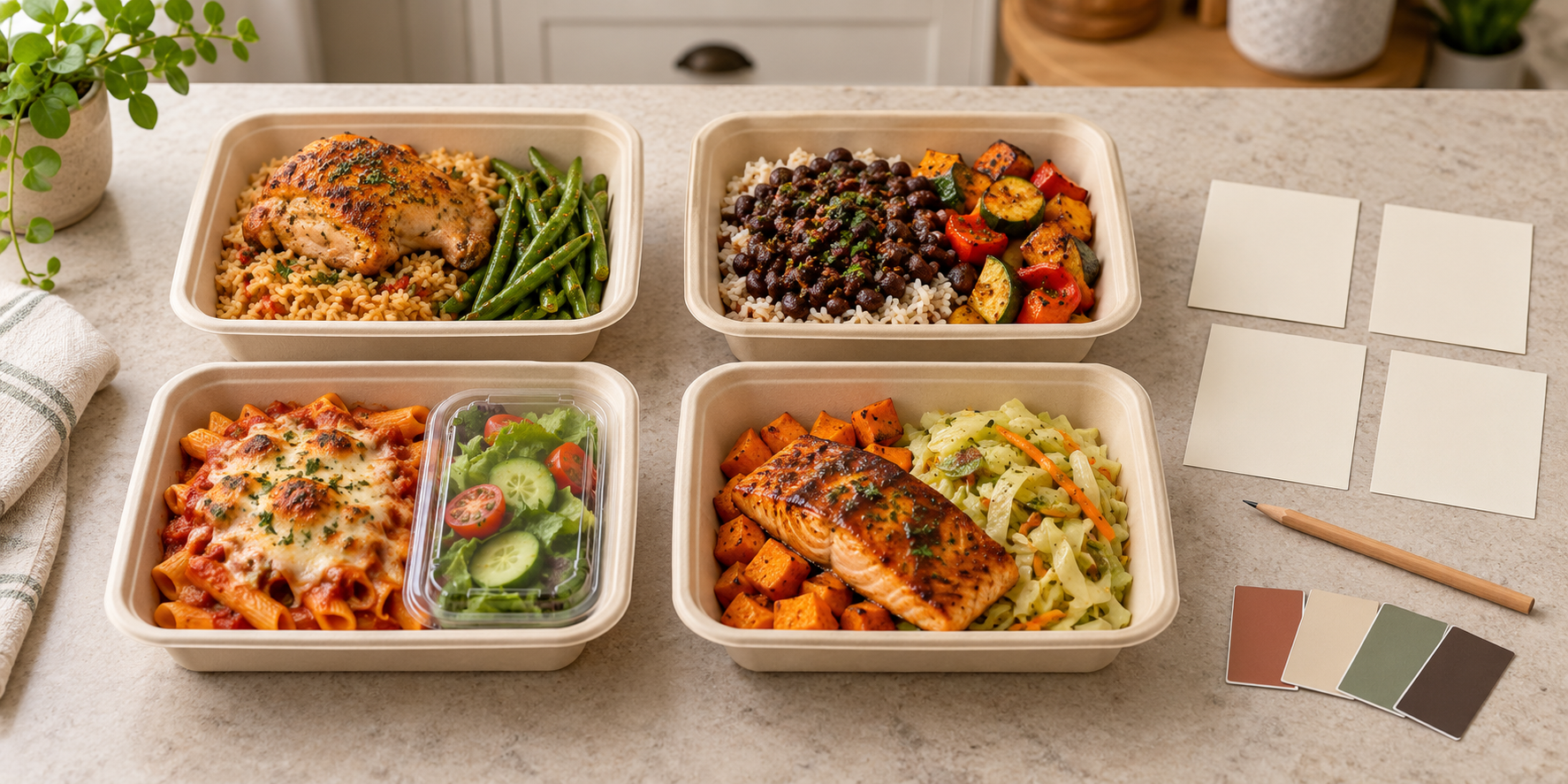
A long list of good dishes is not yet a menu. The useful question is which complete plate fits a real customer occasion, your kitchen, an understandable price, and the pickup experience you can reliably deliver.
This guide gives you 15 food plate ideas to sell, organized as practical starting points rather than guaranteed winners. Then it shows you how to reduce the list to one concept worth costing and testing. The goal is a focused first offer—not a restaurant-sized menu.
Before developing any hot or refrigerated meal for sale, verify that the food, facility, process, and sales route are allowed where you operate. The FDA’s food-business overview explains that requirements vary by product and facility and can include federal, state, and local rules. An appealing idea is not permission to prepare it in a home kitchen.
Start with an occasion, not a favorite recipe
“What should I sell?” becomes easier when you add a customer and a moment. A Friday dinner for families needs a different offer from a Saturday brunch, an office lunch, or a game-day pickup.
The SBA recommends using market research and competitive analysis to examine demand, location, market saturation, and what customers pay for alternatives. For a small plate sale, you can begin with a one-sentence offer brief:
A complete Friday dinner for nearby customers who want a comforting meal they can collect on the way home.
Now compare ideas against that promise. Penn State Extension’s guidance on marketing a food product similarly asks sellers to understand the product, target market, occasion, sales channel, price, and customer benefit. “Everybody” is not a useful target, and “delicious” is not a complete reason to buy.
Use six filters before keeping an idea
Give each candidate a simple one-to-five score. This is a planning tool, not a forecast.
| Filter | What a strong candidate can answer |
|---|---|
| Customer fit | Who buys it, for which meal, and why this complete plate helps |
| Permission | Which authority and approved process apply to the actual food and facility |
| Kitchen fit | Whether your equipment, labor, storage, and schedule can repeat the plate |
| Handoff fit | Whether the intended portion and packaging still make sense at pickup or delivery |
| Price room | Whether the likely selling price can cover the complete cost and leave a profit |
| Offer clarity | Whether a customer can understand the main, sides, choices, price, and handoff quickly |
Do not average away a zero for permission or a kitchen process you cannot control. Put that candidate aside. For the remaining ideas, write the evidence behind each score. “My friends love it” is weaker than “six regular customers asked for a meatless Friday option at this pickup time.”
University of Minnesota Extension notes that direct sellers need to match the product with the customers they can supply well, then investigate price, process, quality, and packaging expectations. That is the standard these ideas should meet.
Comfort-food plate ideas
Comfort plates give customers a familiar complete meal. The opportunity is not to add every possible side; it is to make one combination distinctive and repeatable.
- Lemon-herb chicken plate: roasted chicken, seasoned rice, and green beans. Test whether the chicken portion and rice remain consistent across the full batch.
- Meatloaf dinner: sliced meatloaf, mashed potatoes, roasted carrots, and gravy in a separate cup. Watch the labor involved in shaping, slicing, and packing clean portions.
- Braised beef plate: braised beef, seasoned potatoes, and cabbage. Check whether the likely local price can support the ingredient cost and cooking time.
- Baked chicken and sides: baked chicken, macaroni and cheese, and greens. Test the container layout so the components remain recognizable at handoff.
These are formulas, not fixed recipes. Your approved ingredients, portion, preparation method, and customer occasion determine whether any one belongs on the shortlist.
Bowl-style plate ideas
A bowl can make the offer easy to describe because each component has a visible job: base, main, vegetables, sauce, and optional controlled choice.
- Jerk-style chicken bowl: chicken, rice and peas, cabbage, and one sauce cup. Decide whether the spice level is fixed or offered as one controlled choice.
- Burrito bowl: seasoned protein, rice, beans, roasted corn, and salsa. Limit substitutions so the order record and production count stay clear.
- Glazed salmon bowl: salmon, roasted sweet potato, slaw, and a separate dressing. Treat it as a higher-cost candidate and cost the real portion before judging demand.
- Teriyaki-style chicken bowl: chicken, rice, roasted broccoli, and sauce. Test whether the finished plate keeps its texture through the normal handoff time.
If the idea needs a long build-your-own list to sound attractive, it may be too broad for a first drop. Start with one composed version and one meaningful option at most.
Vegetarian plate ideas
A vegetarian plate should feel designed as a complete offer, not like the main was removed from a meat-based menu.
- Chickpea curry plate: chickpea curry, rice, and roasted vegetables. Test the full packed portion, not only a spoonful from the pot.
- Black bean enchilada bake: a defined slice, corn, and cabbage slaw. Prove the pan yield before promising an order count.
- Mushroom-lentil shepherd’s pie: a defined portion with a green vegetable. Check whether the preparation work fits the price customers in your area will consider.
Vegetarian does not automatically mean simple, inexpensive, allergen-free, or suitable for every customer. Describe the actual ingredients and offer rather than relying on a broad label.
Brunch and special-occasion ideas
An occasion can give a customer a clearer reason to order, but it can also introduce fragile components or extra labor. Keep the menu bounded.
- Breakfast bowl: seasoned potatoes, eggs, turkey sausage, and roasted vegetables. Test the exact packed experience and pickup timing before listing it.
- Chicken-and-waffle plate: chicken, waffle portions, and a separate fruit cup or topping. Pay attention to what happens to texture during the normal wait and trip home.
- Baked ziti dinner: a measured pasta portion, garlic green beans, and a separately packed salad. Keep the cold component distinct from the hot plate in the handoff plan.
- Pulled pork plate: pulled pork, cornbread, slaw, and one sauce cup. Check how many separate packing steps the complete order requires.
Seasonal names can help a menu feel timely, but do not let a holiday theme hide an unclear portion, weak margin, or process your kitchen has not tested.
Build a three-idea shortlist
Choose no more than three candidates and create one card for each:
- intended customer and meal occasion;
- exact main, sides, sauce, and permitted choices;
- expected pickup or delivery format;
- equipment and labor bottleneck;
- comparable local alternatives and their prices;
- rough complete-order cost range;
- biggest unanswered question.
Check alternatives in person and online, but compare like with like. A restaurant entrée, grocery prepared meal, caterer’s half pan, and home-based plate may solve different customer problems. Competition gives context; it does not give you permission to copy a price or assume their costs.
The food-plate pricing guide shows how to calculate ingredients, packaging, labor, fees, overhead, and profit after you choose the concept. Penn State Extension’s price and pricing guidance also separates competition-based context from cost-based pricing and warns that a market-looking price may still fail to cover costs.
Choose one idea to test, not five to launch
Take the highest-scoring concept and turn it into one exact sale portion. Write the recipe version, container, choices, likely price, order cap, and handoff promise. If you cannot describe those details plainly, the idea is not ready for customer feedback.
Next, use the menu-item testing workflow to serve the real version, collect neutral feedback, and run a small paid pilot. If the candidate survives that test, standardize the recipe and portion before increasing the order count.
The best idea is not automatically the most dramatic dish. It is the plate a specific customer can understand, your approved kitchen can repeat, and the price can support. Pick one occasion, score the candidates honestly, and earn the right to add the second idea later.
Ready to move?
Turn the research phase into your first sale.
The guide brings pricing, menu planning, marketing, and setup into one clear playbook.
Get the guide on Gumroad