How to Build a Small Plate-Sale Menu That Works
Build a focused plate-sale menu around customer demand, shared ingredients, tested yields, kitchen capacity, clear choices, and real sales data.
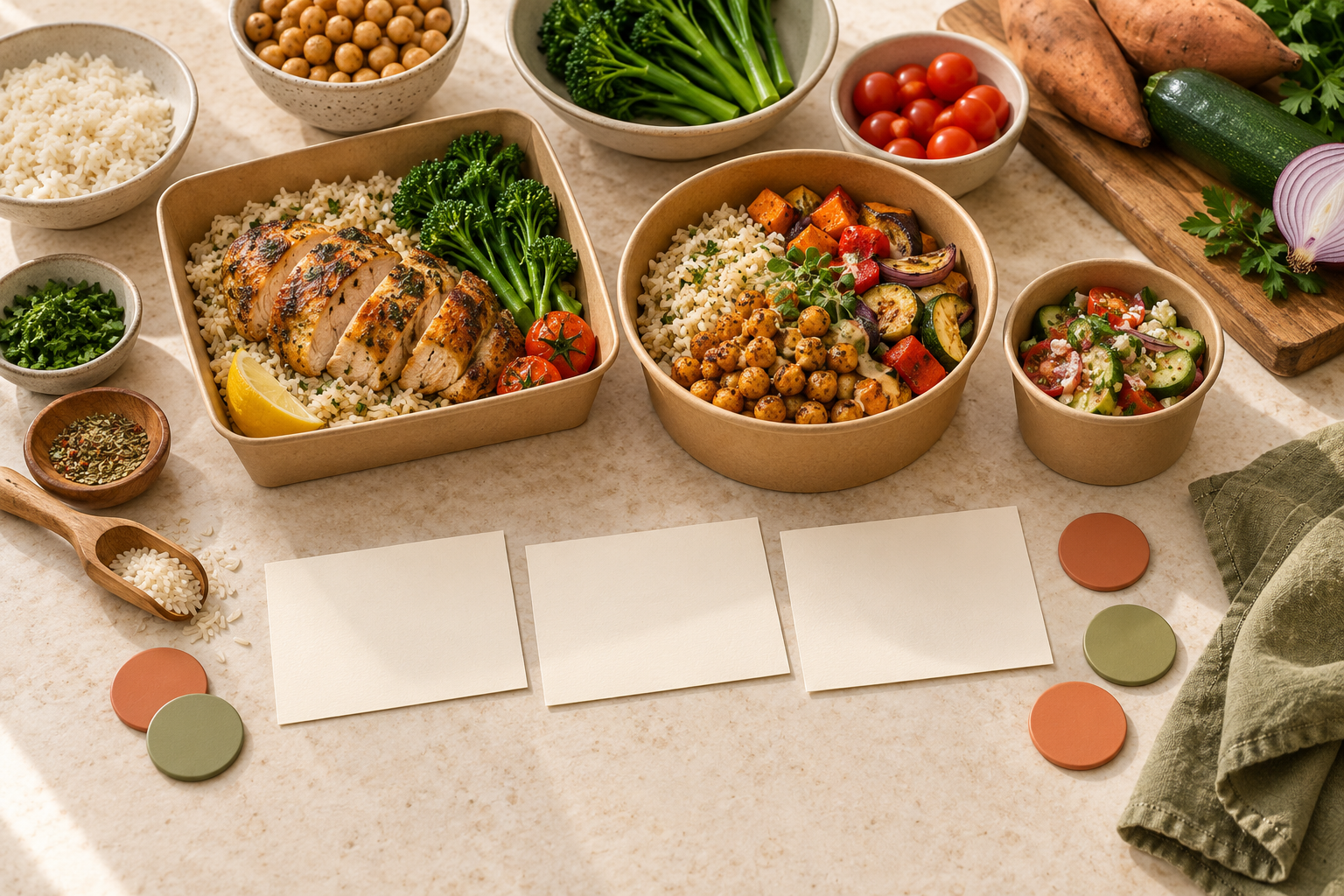
A good plate-sale menu is not the longest list of dishes you can cook. It is a small set of complete offers that a specific customer can understand, your kitchen can produce together, and your price can support.
This guide will help you build that menu from the sale backward. You will choose one customer occasion, define a simple menu structure, map shared ingredients, test the production load, write the customer choices, and use paid-order data to decide what earns a place next time. The result should feel focused, not limited.
Before taking orders, confirm that every food, preparation process, kitchen, and sales method is allowed where you operate. The FDA Food Code is a model used by many regulators, not a universal permit; the 2026 Food Code overview explains that jurisdictions use it when developing their own retail-food rules. Verify current local requirements with the authority for your address and the exact menu you plan to sell.
Start with one customer occasion
Do not begin with every dish people have praised. Begin with the meal you are trying to replace: Friday dinner after work, a Saturday family pickup, an office lunch, or a game-day order.
The SBA’s current market-research guidance recommends examining demand, customer location, existing alternatives, and the prices people pay for them. Turn that into a one-sentence menu brief:
A complete Friday dinner for nearby customers who want a comforting meal they can collect between 5:30 and 7 p.m.
Now every proposed item has a job. It should fit that customer, time, handoff, and likely price. A delicate brunch item may be appealing but wrong for an evening pickup. A popular protein may not fit if its cost forces the complete plate beyond what this customer will pay.
If you still need candidate dishes, use the food plate ideas guide to make a shortlist. This article begins after that brainstorm, when the question changes from “What could I sell?” to “Which items belong together in one manageable offer?”
Choose a menu shape before choosing more dishes
There is no research-backed perfect number of items for every plate sale. Research on choice overload is conditional: a meta-analysis in the Journal of Consumer Psychology found that difficulty, complexity, preference uncertainty, and the customer’s goal affect whether a larger assortment becomes burdensome. The practical lesson is not “always offer three.” It is to remove choices that add work without helping the customer make a meaningful decision.
For a first test, use this editorial starting shape:
- one complete anchor plate for the main customer and occasion;
- one genuinely different alternative only when you can produce it well;
- one or two controlled extras that share the same production plan;
- no open-ended substitutions.
This is a test structure, not an industry benchmark. One plate may be enough. A second main belongs only if it serves a real customer need and survives the same cost and capacity checks. Five flavors built from five separate prep routines are not one simple menu merely because they appear on the same order form.
Write each item as a complete unit: main, sides, sauce, portion, container, price, and permitted choice. If the plate cannot be described without “and customers can also ask for…,” the offer is not controlled yet.
Build an ingredient and process map
Place the item cards side by side and list what each one requires. Mark ingredients and work that can be shared without changing the recipe or confusing the order.
| Menu part | Anchor plate | Alternative | Shared or separate? |
|---|---|---|---|
| Base | Seasoned rice | Seasoned rice | Shared batch |
| Main | Roasted chicken | Spiced chickpeas | Separate cook step |
| Vegetable | Roasted vegetables | Roasted vegetables | Shared batch |
| Sauce | Herb sauce | Herb sauce | Shared if recipe fits both |
| Packing | Rectangular container | Round container | Separate stock and count |
Shared ingredients can simplify purchasing and reduce the number of partial packages left after a sale, but do not force every item to taste the same. The purpose of the map is to expose complexity. A new side that needs another supplier, refrigerator zone, cooking vessel, garnish, container, and packing instruction is six additions—not one.
Use tested yields rather than package labels or memory. The USDA Food Buying Guide explains how purchase form, trimming, cooking method, and portion tools affect the servings obtained from an ingredient. Its data is designed for child nutrition programs, so it is a planning reference rather than your recipe’s guaranteed yield. Record what your own batch and portion tool actually produce, then connect those numbers to the standardized-recipe workflow.
Run the kitchen-capacity gate
A menu is not ready because every item works alone. It has to work when the order mix is unknown and all accepted orders are due in the same handoff window.
For each item, record:
- preparation, cooking, holding, and packing time;
- equipment and workspace it occupies;
- refrigerator, hot-holding, and container capacity;
- the step that one person cannot perform at the same time as another;
- the latest safe correction point when production falls behind.
Then test a difficult but plausible mix. If your cap is 24 plates, do not rehearse only 24 anchor plates. Try the combination most likely to create a bottleneck, such as 12 chicken plates, 10 chickpea bowls, and 2 orders with every permitted extra. This is a production test, not a demand forecast.
If the second main doubles active cooking time or needs equipment already occupied by the anchor, remove it from this sale or lower the total cap. Use the production-schedule guide to place every approved item on one timeline before publishing the menu.
Price every item as its own offer
Shared rice does not make the chicken plate and chickpea bowl equally profitable. Cost each finished item using its tested yield, ingredient use, packaging, labor, payment fees, fulfillment cost, overhead allocation, and desired profit contribution.
The broader food-plate pricing guide provides the complete method. Keep the menu decision tied to two questions:
- Does each item produce an acceptable result at a price this customer can understand?
- What happens to the whole sale when customers choose a different mix than you hoped?
A high-margin item that slows every order may damage the sale. A popular item with a weak contribution may create busy work without enough return. EHL Hospitality Business School’s current menu-engineering explanation recommends looking at both contribution margin and sales mix, while also considering labor, waste, preparation time, and operational complexity.
Do the same for extras. A sauce cup, extra side, or larger portion needs its own cost, packing step, and order field. If it is free only because its cost was forgotten, it is not a controlled extra.
Make every customer choice countable
The customer-facing menu should make the plate, price, cutoff, sale date, handoff, and permitted choices visible together. Do not use direct messages as a hidden customization system.
Write required choices as required fields, optional extras as countable modifiers, and unavailable requests as a clear boundary. For example:
- Chicken plate: roasted chicken, seasoned rice, roasted vegetables, and herb sauce.
- Chickpea bowl: spiced chickpeas, seasoned rice, roasted vegetables, and herb sauce.
- Extra: one additional sauce cup.
- Boundary: no side substitutions for this menu drop.
That structure gives the customer a meaningful main choice without creating a new recipe for every order. Check the final wording with the clear menu-description workflow, then place it in one order path that stops at your actual capacity.
Test the menu with paid orders
Do not promote every proposed item as permanent. Run one small, capped sale and treat the result as evidence.
Record units sold, selling price, direct cost, actual labor time, waste, stockouts, substitutions requested, packing errors, and customer questions for each item. Penn State hospitality research on menu-item complementarity shows why the combinations customers buy can matter alongside an entrée’s individual contribution. For a plate sale, that means noting which extras travel with which mains instead of reviewing every line in isolation.
After fulfillment, classify each item in plain language:
- Keep: customers bought it, the economics worked, and production stayed controlled.
- Fix: demand existed, but price, yield, wording, or process needs one clear change.
- Retest: the sample was too small or the menu placement made the result unclear.
- Remove: it added complexity without enough demand or contribution.
Do not add two replacements when one item is removed. Change one variable, run another bounded sale, and compare the same measures.
Use this final menu-release check
Before the post goes live, confirm:
- the menu serves one named customer occasion;
- every item is allowed for the food, kitchen, and sales route;
- each plate has a tested recipe, portion, yield, container, and price;
- shared ingredients genuinely reduce work rather than hide different processes;
- the worst plausible order mix fits the schedule and equipment;
- customer choices are required, optional, or unavailable—not open-ended;
- the order cap reflects the whole menu, not just the easiest item;
- the next review will use paid-order and production data.
Start with the smallest menu that can answer the customer’s need and produce useful evidence. Give every item a reason to exist, test the combined workload, and let real orders earn the next addition.
Ready to move?
Turn the research phase into your first sale.
The guide brings pricing, menu planning, marketing, and setup into one clear playbook.
Get the guide on Gumroad