How to Build a Handwashing Routine for Plate Sales
Build a handwashing routine for plate sales with a ready sink, clear task-change triggers, correct technique, glove rules, and a timed menu test.
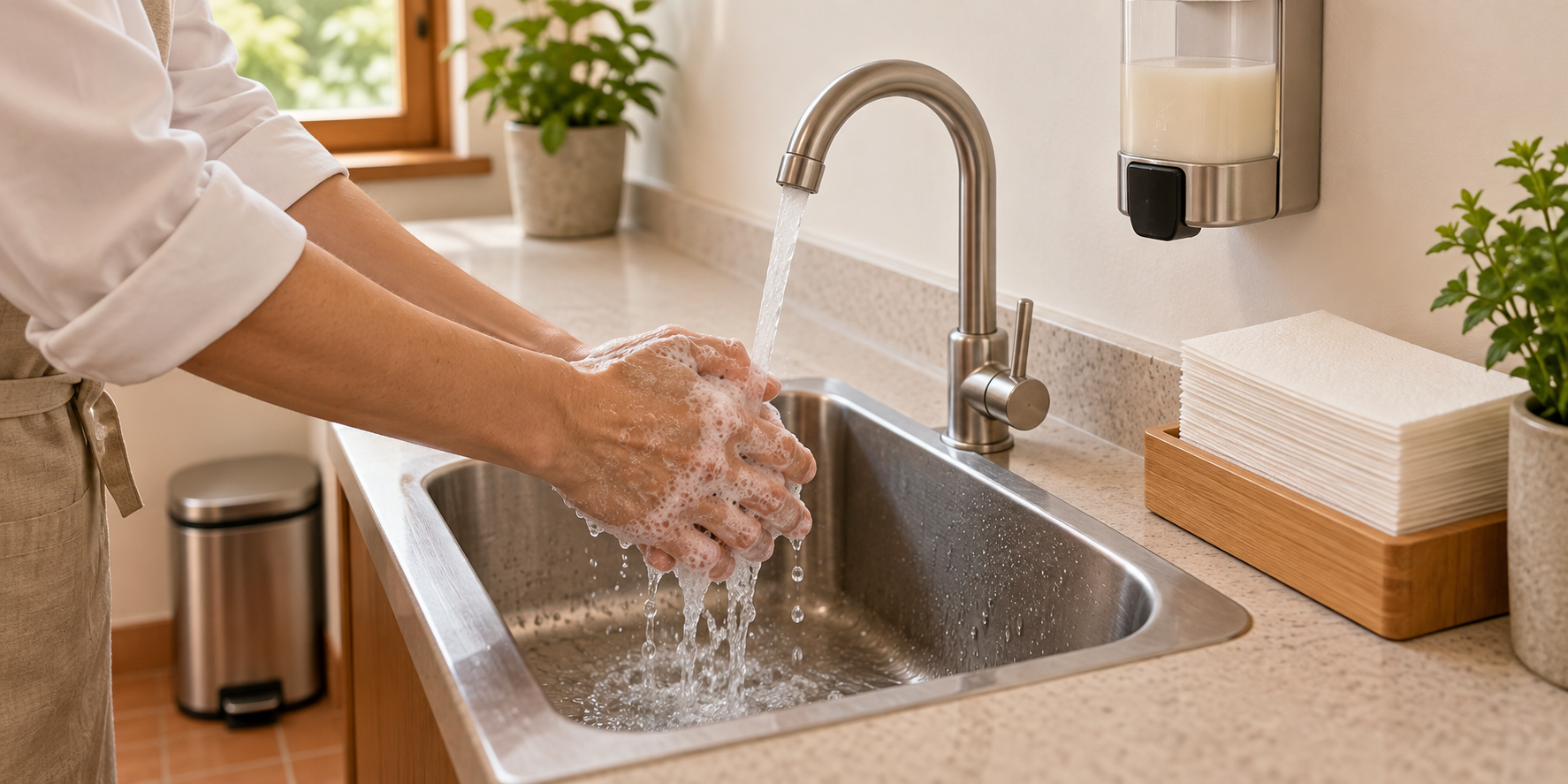
A sink, soap, and a reminder to “wash often” do not make a handwashing system. During a busy plate sale, the sink can fill with utensils, the towel supply can run out, and one quick phone check can interrupt an otherwise clean packing task.
This guide will help you release a usable handwashing station, map the moments that require a wash, follow one repeatable technique, manage gloves correctly, and test the routine against a real menu. The goal is not a poster on the wall. It is a production plan in which clean hands are available when the food needs them.
Handwashing and facility requirements vary by product, operation, and jurisdiction. FDA explains that a home-based food business must identify the federal, state, and local requirements that apply. Confirm the approved facility, sink setup, foods, training, and hand-contact rules with the authority responsible for your operation before selling.
Release the sink before releasing the kitchen
Start with the sink your regulator has approved for handwashing. The FDA Food Code is a model that jurisdictions may adopt or modify; it is not automatic permission to run a meal business from a home kitchen. In that model, workers wash at a handwashing sink or approved automatic facility—not in a sink used for food preparation, utensil washing, or disposal of mop water.
Treat that distinction as an operating control. If your approved hand sink is blocked by dishes, used to rinse produce, or missing supplies, handwashing is not truly available. Before ingredients come out, check:
- Clean running water and working drainage
- The approved hand cleanser in its dispenser
- The required individual towels or other approved drying method
- A suitable waste bin that can be used without contaminating clean hands
- An unobstructed route to the sink
- No food, equipment, chemicals, or household items stored in or around the basin
The 2022 FDA Food Code handwashing provisions specify soap and an approved drying provision at the hand sink. Your local rule decides what the station must contain. Write the regulator-approved setup on an opening checklist so “the soap is somewhere in the cabinet” cannot pass as ready.
Use one complete wash every time
A rushed rinse is not a handwash. The FDA model describes a complete procedure lasting at least 20 seconds: rinse under clean running warm water, apply the cleanser, rub vigorously for at least 10 to 15 seconds with attention to fingertips, between fingers, and under nails, rinse thoroughly, and dry immediately using the approved method.
FoodSafety.gov gives home cooks a compatible public sequence: soap, a 20-second scrub, rinse, and dry. For a plate-sale operation, use the exact procedure required by your regulator and train every helper to perform the same sequence.
Make the finish part of the method. Wet hands can move contamination more readily than properly dried hands, and touching a dirty handle immediately defeats the clean result. Where the approved setup uses manual handles, follow your procedure for avoiding recontamination, such as using a clean disposable towel as a barrier when required.
Keep nails and exposed skin within the personal-hygiene rules that apply to your operation. A glove cannot turn an unwashed, injured, or contaminated hand into a released food-contact tool. Connect illness symptoms or an infected wound to the separate sick-day decision plan rather than trying to solve a stop-work issue with extra washing.
Map triggers to the tasks on your menu
“Wash frequently” is too vague when three pans, a ringing phone, and eight pickup bags need attention. Write wash triggers next to the actual task changes in your menu.
Under the FDA model, triggers include immediately before food preparation; after using the toilet; after coughing, sneezing, eating, or drinking; after handling soiled equipment; as needed during preparation to prevent cross-contamination; when switching from raw food to ready-to-eat food; before putting on gloves for a food task; and after other activities that contaminate the hands.
CDC’s kitchen guidance adds practical home interruptions such as handling garbage, cleaning chemicals, pets, flour, eggs, and raw animal foods. A small seller may also need a wash after touching:
- A phone, payment reader, door handle, or pickup bell
- Delivery cartons, grocery bags, or raw-food packaging
- A face, hair, apron, household surface, or personal item
- A dirty towel, used utensil, sink control, or waste-bin lid
- Cash, customer property, or an item returned from outside the prep area
Your adopted rule—not this list—controls. The useful step is to walk one menu from storage to handoff and mark every point where clean hands become uncertain. If you cannot tell whether a touch created a new trigger, stop and wash under the approved procedure before returning to food.
Design out avoidable handwashing failures
CDC’s current restaurant research found that workers in the observed studies washed when they should about one in three times. It identifies time pressure, inaccessible sinks, and lack of training as barriers, and recommends revising preparation steps to reduce avoidable wash events.
That does not mean skipping necessary washes. It means changing the workflow so contamination is less likely to interrupt clean work. For example:
- Finish receiving and put away outer cartons before opening clean prep.
- Stage clean tools, containers, labels, and single-use articles together.
- Complete raw-food work in its defined block.
- Run the full cleaning and sanitizing reset.
- Wash hands before moving into cooked or ready-to-eat work.
- Put the phone on a cleanable stand outside the active food zone and assign one person to answer it.
- Pack in a protected block instead of bouncing between dirty receiving items and open meals.
Put these blocks into the plate-sale production schedule. A realistic schedule includes the walk to the sink, the complete wash, drying, and return—not an imaginary zero-second transition.
Treat gloves as a task tool, not clean hands
Gloves can protect ready-to-eat food only when the surrounding process is controlled. In the FDA model, hands are washed before gloves are put on for a food task, and single-use gloves are used for one task and discarded when soiled, damaged, or interrupted. CDC’s food-worker norovirus guidance likewise says hand sanitizer is not a substitute for soap-and-water washing and that hands should be washed around glove use.
Write the glove task narrowly: “portion cooked chicken with clean tongs” is clearer than “packing.” If the gloved hand touches a phone, raw package, face, bin, door, dirty apron, or another contaminating surface, stop. Discard the gloves, handle the interruption, wash as required, and put on a new pair only if the next task needs them.
Use utensils or another approved barrier for ready-to-eat food when your rule requires it. Do not use gloves to cover a missing hand sink, stretch one pair across several tasks, or return a glove box to clean storage after it sat in the raw-work zone. For allergy-related orders, layer the more specific ingredient and cross-contact controls over this baseline routine.
Run a menu rehearsal before taking orders
Test the system with a dry run using no customer food. Choose a representative menu—perhaps cooked chicken, rice, and a ready-to-eat slaw—and walk through every task with empty containers or safe props. Keep a simple tally for each planned handwash and each surprise trigger.
| Checkpoint | What to observe | Corrective decision |
|---|---|---|
| Opening | Sink access, water, soap, drying supply, and waste capacity | Restock or stop before prep |
| Raw-food block | Package handling, tool changes, and the path to the sink | Move supplies or revise the sequence |
| Clean transition | Surface reset, handwash, and return to ready-to-eat work | Repeat the reset if the clean path is broken |
| Packing | Phones, labels, bags, doors, and glove changes | Assign roles or move interrupting items |
| Closing | Used supplies, contamination events, and remaining stock | Update the next production plan |
Time the complete route, not just the scrub. If the sink is hard to reach, the towel bin fills too quickly, or the same person must keep leaving packing to answer customers, reduce the order cap, change the role assignment, or simplify the menu. Do not respond by deleting wash triggers from the plan.
Finish with a seven-point handwashing check
Before the next sale, confirm:
- Approval: The facility, sink, supplies, foods, and hand-contact procedure are allowed for your operation.
- Access: The handwashing sink is unobstructed and used only for its approved purpose.
- Method: Every worker can perform the complete wash and dry sequence correctly.
- Triggers: Menu tasks and common household interruptions lead to explicit wash decisions.
- Flow: Raw, dirty, clean, ready-to-eat, packing, and customer-contact work do not bounce together.
- Gloves: Each pair has one task, and removal leads to the required wash before clean work resumes.
- Correction: Missing supplies, a blocked sink, a broken wash, or uncertain hand contact stops the task.
Start by mapping one plate from ingredient pull to sealed bag. Mark every hand contact, stock the approved sink, and rehearse the route until the necessary washes fit the schedule without shortcuts. The Selling Plates guide can help connect that routine to your menu, order cap, pricing, and full sale-day system.
Ready to move?
Turn the research phase into your first sale.
The guide brings pricing, menu planning, marketing, and setup into one clear playbook.
Get the guide on Gumroad