How to Handle a Food-Safety Complaint After a Plate Sale
Respond to a food-safety complaint with a calm intake, documented food hold, health-authority contact, customer follow-up, and controlled restart.
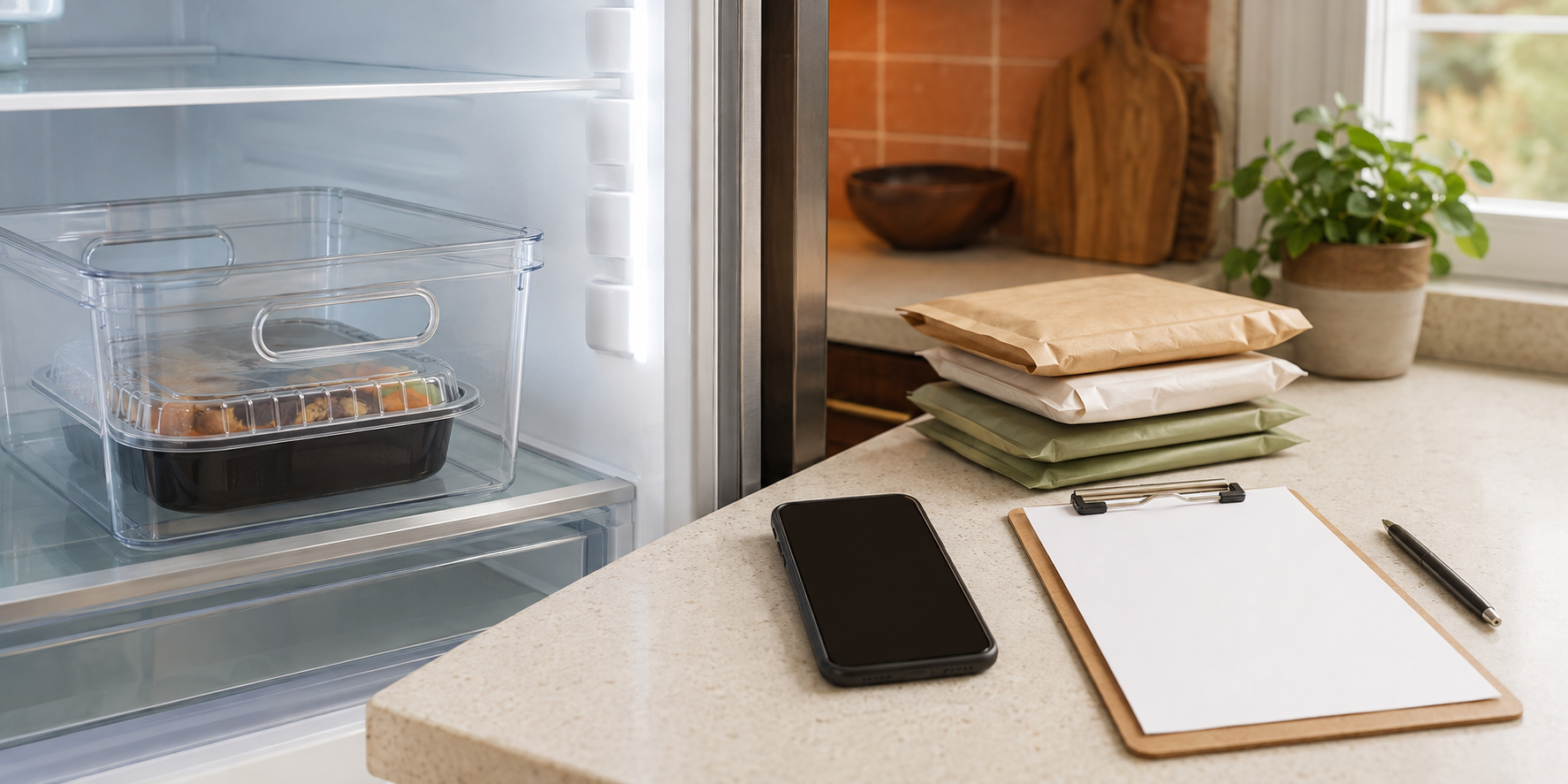
A customer messages the morning after pickup: “I got sick after eating the plate.” It is tempting to answer quickly, send a refund, and hope the problem ends there. But one message may contain a medical emergency, a reportable complaint, a clue that connects multiple orders, or a concern unrelated to your food. You cannot determine the cause from a direct message, and customer service alone is not a food-safety response.
This guide will help you take the report calmly, record useful facts, stop further sale of related food, contact the correct health authority, resolve the customer’s order, and restart only after a documented review. The goal is to protect people and preserve information—not to prove or disprove the customer’s conclusion yourself.
Reporting duties and food-hold instructions depend on the complaint, product, permit, and jurisdiction. The FDA Food Code is a model for retail-food rules, not one law for every home seller. Before your next sale, confirm the current complaint-reporting contact, trigger, record, food-disposition rule, and restart authority with your state or local regulator.
Respond to the person before defending the business
Start with concern and facts. Do not diagnose food poisoning, identify a germ, argue that nobody else complained, or promise that your food caused the illness. A useful first reply can be simple:
I’m sorry you’re unwell. I’m recording the details so I can protect related food and follow the correct reporting process. If this is an emergency, call 911. Otherwise, please contact a healthcare professional and your local health department for advice and reporting.
Adapt that example to the situation; do not use it as medical advice. FoodSafety.gov tells people with suspected food poisoning or an allergic reaction to call a doctor, use 911 for an emergency, and contact the county or city health department about suspected foodborne illness. A customer who mentions trouble breathing, loss of consciousness, or another apparent emergency needs the emergency direction first, not your intake form.
Ask permission to collect details and explain why. Keep your tone neutral. “Help me connect this report to the correct order and batch” is more useful than “What else did you eat?” asked as a challenge. Do not ask the customer to return to your home, surrender possible evidence, or consume the food again. Tell them to follow healthcare and health-authority instructions about leftovers or packaging.
Create one complaint record immediately
Move the conversation out of scattered comments and into one dated record. The CDC-hosted CIFOR guidance for food-establishment operators includes an illness-complaint tracking log and forms for reconstructing a food item. Its complaint fields provide a practical starting point for a small seller.
Record only what the person reports:
- Customer name and current contact information
- Order identifier, pickup or delivery time, and who collected it
- Every food and beverage from the order that each person ate
- Number of people who ate and number who report symptoms
- Symptoms, when they began, and whether care was sought
- Whether any food, container, receipt, or photo remains
- The exact time you received the complaint and every action you took
Do not edit an earlier entry to make the timeline look cleaner. Add a new timestamped note when information changes. Protect medical and contact details from unnecessary sharing, and retain the record according to your applicable privacy and business rules.
Assign one complaint number even if the customer sends messages through several channels. Then check your order list for other reports involving the same menu, sale date, ingredient, pickup period, or household. CDC’s review says complaint systems can help identify outbreaks; a consistent log makes connections visible that isolated refunds do not.
Put related food and sales on hold
While the facts are being reviewed, stop offering the named item and pause sale of food that may share the same batch or ingredient. “Hold” means the food is clearly separated, protected against use, and not sold, served, donated, repurposed, or eaten. It does not mean the food is safe.
Build the scope from records rather than appearances. Connect the complaint to:
- The production batch and portions packed from it
- Ingredient brands, suppliers, lot or code details, and substitutions
- Cooking, cooling, reheating, hot- or cold-holding records
- Thermometer checks, sanitation records, and worker-health reports
- Containers, garnishes, sauces, and other foods made on shared equipment
- Orders that received the same food or related batch
Photograph intact identifiers and note where held items are stored. Keep the suspected food sealed and separate under its required temperature control. FDA explains that investigators may seek an intact product or samples from the same lot and code. Ask the responsible authority before discarding possible evidence, unless immediate disposal is required for safety; never return held food to sale without an authorized decision.
The records built into your production schedule and food-receiving workflow should let you reconstruct the batch without relying on memory.
Contact the authority using the current local trigger
Do not wait for a second complaint unless your responsible authority explicitly tells you that is the trigger. FoodSafety.gov routes restaurant-food illness reports to a city, county, or state health department, but a home-food program may use a different office. Save the exact contact and after-hours method in your plan before you need them.
Rules are not uniform. For example, Minnesota requires the person in charge to notify the local health department or state health department about specified customer reports of diarrhea, vomiting, or suspected enteric infection after eating at the establishment. That is a jurisdiction-specific example, not a nationwide threshold. Your regulator may define a different event, deadline, or contact path.
When you call, have the complaint record, menu, order list, batch details, ingredient identifiers, temperature logs, worker-health information, and held-food location ready. State what you know and what you do not know. Ask for explicit direction on reporting, customer outreach, sampling, food disposal, cleaning, further sales, and reopening. Record the person, agency, time, instructions, and any case number.
Separate the refund from the safety response
A refund can be appropriate under your posted policy, but it does not close the complaint. Track the financial resolution in the same order record while keeping the food-safety actions open.
Use language that is prompt and humane without claiming a cause you cannot establish. Confirm that you received the report, explain that related food has been held, share the correct reporting route, and state the refund or order resolution accurately. Do not pressure the customer to delete a review, sign a release, accept store credit instead of reporting, or keep the concern private.
If the health authority directs you to contact other customers, use the message and scope it approves. Do not improvise a public diagnosis or name the original customer. Keep the clean contact list from your preorder system so affected buyers can be reached without searching through social messages.
Review the system before restarting
A complaint is not proof that your food caused an illness, and a clean-looking kitchen is not proof that it did not. Review the evidence as a process check. FDA describes active managerial control as a system of procedures, monitoring, corrective action, verification, and records. Use that framework to ask:
- Did the recipe, ingredients, or supplier change?
- Were required cooking, cooling, reheating, and holding checks completed?
- Was the thermometer accurate and used in representative portions?
- Did worker illness, allergen cross-contact, or a sanitation failure occur?
- Do other orders, complaints, leftovers, or supplier alerts connect to the event?
- What correction was completed, checked, and recorded?
- Has the authority released the food, process, or operation to resume when required?
Link the review to the sick-day plan and food-allergy order workflow instead of inventing separate rules during a complaint. If the evidence cannot support a safe restart, cancel the next sale and follow the authority’s direction.
Test the response before the next menu drop
Run a ten-minute scenario: at 9 a.m., one customer reports vomiting after last night’s chicken plate; six portions from the same batch remain refrigerated, and four customers bought the same item. Can you find the local reporting contact, connect the order to the batch, place the remaining food on hold, produce the records, refund the order, and pause the next sale without guessing?
Before reopening orders, confirm:
- Response: The first message prioritizes care and avoids a diagnosis.
- Record: One timestamped log connects the person, order, food, symptoms, and actions.
- Hold: Related food is separated, protected, controlled, and unavailable for sale.
- Trace: Batch, ingredient, supplier, process, worker, and customer records are retrievable.
- Report: The current local trigger, contact, and after-hours path are written down.
- Customer care: Refunds and updates are tracked separately from the investigation.
- Restart: Corrections and any required authority approval are documented.
The first useful action is to save your responsible authority’s contact beside a blank complaint form. Then test the path while no customer is waiting. The Selling Plates guide can help connect that response plan to the menu, records, ordering, and repeatable weekly operation around it.
Ready to move?
Turn the research phase into your first sale.
The guide brings pricing, menu planning, marketing, and setup into one clear playbook.
Get the guide on Gumroad