How to Keep Food Hot During Pickup and Delivery
Build a safer hot-food handoff system with clear temperature targets, shorter pickup windows, insulated packing, and simple order logs.
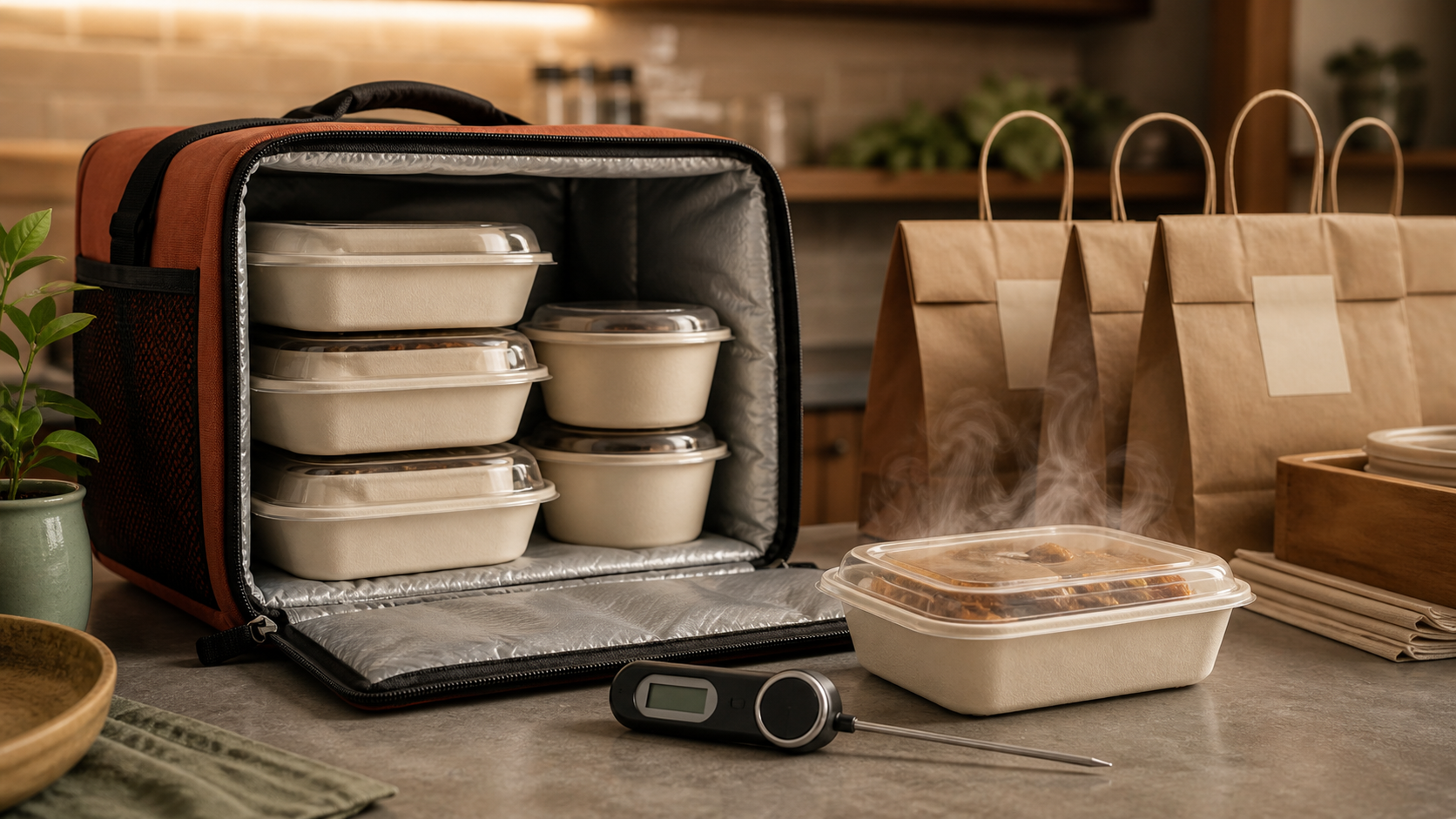
Your food can leave the stove cooked correctly and still lose too much heat while ten customers arrive at different times. This guide will help you build a simple hot-holding and handoff system: choose a clear temperature target, shorten the time between packing and pickup, check representative orders, and record enough detail to spot problems.
This is operational food-safety guidance, not permission to sell temperature-controlled meals from any home kitchen. Before offering hot plates, confirm the current requirements with your local or state health department. Your jurisdiction decides which foods, kitchens, permits, equipment, and holding procedures it allows.
Start with one clear hot-holding target
Cooking temperature and holding temperature do different jobs. Cooking brings a food to the temperature needed for that recipe and food type. Hot holding keeps the cooked food out of a range where harmful germs can multiply quickly while it waits for the customer.
For a simple operating rule, plan to keep hot orders at 140°F or above until handoff. The USDA guidance for take-out and delivered food tells consumers to keep hot food at 140°F or above and to monitor it with a food thermometer.
You may also see 135°F in professional food-service materials. The FDA Food Code model uses 135°F for hot holding, while USDA’s consumer-facing take-out guidance uses 140°F. Choosing 140°F as your working floor gives your small operation an easy number to train around, but it does not replace an adopted local rule. The FDA explains that its Food Code is a model that state and local jurisdictions may adopt or modify.
Do not confuse the holding target with a food’s safe final cooking temperature. For example, the CDC lists different minimum cooking temperatures for whole cuts, ground meat, poultry, fish, and leftovers. Use the rule required for the food you are cooking, then move into your hot-holding workflow.
Design the menu around the handoff
Some foods tolerate a wait better than others. Braised meat in sauce, beans, rice, macaroni and cheese, and sturdy roasted vegetables often hold more predictably than fried food, delicate fish, or an item that becomes soggy once sealed. Safety comes first, but texture determines whether the customer enjoys the plate.
Before adding an item to a menu drop, run a realistic hold test:
- Cook and portion the plate exactly as you would on sale day.
- Put it in the actual container, bag, and insulated carrier.
- Check and record its temperature when packed.
- Leave it in the planned holding setup for 15, 30, and 45 minutes.
- At each interval, check a fresh test plate rather than repeatedly opening the same customer container.
- Note temperature, condensation, leaks, crispness, sauce separation, and container softness.
This test tells you more than guessing from the stove. If a dish falls below your working floor or loses quality before the end of the planned window, change the recipe, portion size, packaging, batch timing, or menu.
Keep the launch menu small while you learn the pattern. The broader guide to starting a plates business without getting overwhelmed explains why one focused menu day and fewer dishes are easier to repeat.
Build a short pickup-window system
Hot-holding equipment cannot rescue a schedule in which every order is packed at 4:00 p.m. and the last customer arrives at 6:30 p.m. The strongest control is often a shorter gap between finishing, packing, and handoff.
Split a large pickup period into small slots. If 24 customers are collecting between 4:00 and 6:00, you might offer four 30-minute windows with a six-order capacity in each. Stage the cooking and packing so each group is ready shortly before its window. That example is a capacity plan, not a safety limit; your food, equipment, and local requirements determine what is acceptable.
Use one order list with these fields:
- Customer name and order number
- Promised pickup or delivery window
- Batch or pan identifier
- Packed time
- Temperature check time and reading
- Handoff time
- Late-customer action
Send a reminder before the customer’s slot and a clear message when the order is ready. If someone will be late, do not leave the bag on a porch or counter. Keep it under active hot holding if your approved setup can maintain the required temperature, or follow your documented discard or cooling procedure.
The USDA’s two-hour rule—reduced to one hour when the surrounding temperature is above 90°F—is a consumer discard backstop for perishable food outside temperature control. It is not a target for how long a seller should let packed orders sit. Build a tighter operating window and measure what happens inside it.
Pack for heat without trapping every problem
An insulated carrier slows heat loss; it does not add heat or prove that the food is safe. Preheat a carrier only according to its manufacturer’s directions, load it quickly, keep it closed, and separate hot orders from cold drinks or desserts.
Match the container to the food. A vented lid may protect fried texture but release heat faster. A tightly sealed lid may preserve heat but create condensation. Sauces can leak when cups are placed sideways, and steam can soften some plant-fiber containers. Your hold test should decide the combination.
Use these packing habits on every sale day:
- Portion food while it is still at the proper temperature.
- Close each container promptly and label the order before it enters the carrier.
- Group orders by pickup slot, not alphabetically across the whole day.
- Open the carrier only when adding or removing an order.
- Keep carriers off the floor and away from open doors, air-conditioning vents, pets, and customer traffic.
- Use a separate clean carrier for cold items.
For cold sides, desserts, or drinks that require refrigeration, hold them at 40°F or below and combine them with the hot order only at handoff. The University of Minnesota Extension’s cooler guidance recommends starting with cold food, using enough ice or frozen packs, limiting lid opening, and keeping the cooler out of heat.
Check temperatures without slowing the line
Use a clean, food-appropriate thermometer; appearance and steam are not measurements. Follow its manufacturer’s instructions for cleaning, sanitizing, placement, and accuracy checks.
You do not need to stab every finished customer plate if that would contaminate or damage the food. A practical plan can use representative checks from each batch, pan, or packing interval, provided that plan meets your regulator’s requirements. Measure the food itself at its thickest or coolest likely point, not the air inside the carrier.
A simple check routine might be:
- Verify the hot-holding unit before packing begins.
- Check the first portion from each new batch.
- Check a representative order at a set interval, such as every 30 minutes.
- Recheck after an equipment change, long delay, open carrier, or unexpected rush.
- Record the reading immediately.
Decide the corrective action before service. If food is below your required holding temperature, do not guess, mix it into a hotter batch, or quietly hand it off. Stop and use the reheating, rapid-cooling, or discard procedure approved for your operation. Time used instead of temperature as a public-health control has formal conditions in the FDA model—including written procedures, marking, and discard times—so it is not a four-hour window to improvise.
Give delivery orders their own rules
Delivery adds travel time, vehicle temperature, traffic, and multiple stops. Start with a small radius and one order per route until you know how your carrier performs. Map the route before packing and include parking and handoff time, not just the app’s drive estimate.
Keep the insulated carrier in the climate-controlled passenger area rather than a hot trunk. Secure it flat so containers cannot tip. Do not open it between stops simply to check the bags; use your logged test runs to set a route limit and check food at planned points.
If you cannot keep hot food at the required temperature for the full route, change the service. Offer pickup only, reduce the radius, send one order at a time, use approved powered holding equipment, or sell the item chilled with safe reheating instructions when that method is allowed. Delivery fees and packaging also belong in your plate cost; the food plate pricing method shows where to include packaging, labor, and overhead.
Use a five-point sale-day checklist
Before accepting the first order, make sure you can answer yes to all five:
- Rules: Have you confirmed current local requirements for the food, kitchen, hot-holding method, transport, and records?
- Equipment: Are the thermometer, holding unit, carriers, containers, labels, and cold packs clean and ready?
- Timing: Does every order have a capped slot tied to a cooking and packing batch?
- Checks: Do you know when to measure, where to record the result, and what action follows a low reading?
- Communication: Do customers know their window, handoff method, and how to contact you if they are delayed?
Then run the day from the log, not from memory. After service, compare packed and handoff times, low readings, late pickups, leaks, and quality complaints. Adjust the next menu or slot capacity based on that evidence.
A safe handoff is a chain: an allowed menu, correct cooking, controlled holding, tested packaging, short windows, temperature checks, and a clear response when something goes wrong. Start by testing one plate in its real container and carrier today. That small rehearsal gives you the numbers you need before a paying customer’s dinner is waiting.
Ready to move?
Turn the research phase into your first sale.
The guide brings pricing, menu planning, marketing, and setup into one clear playbook.
Get the guide on Gumroad