What Is a Plate Sale? How the Business Model Works
Learn what a plate sale is, how the limited-menu preorder model works, what makes it different, and whether it fits your home food business idea.
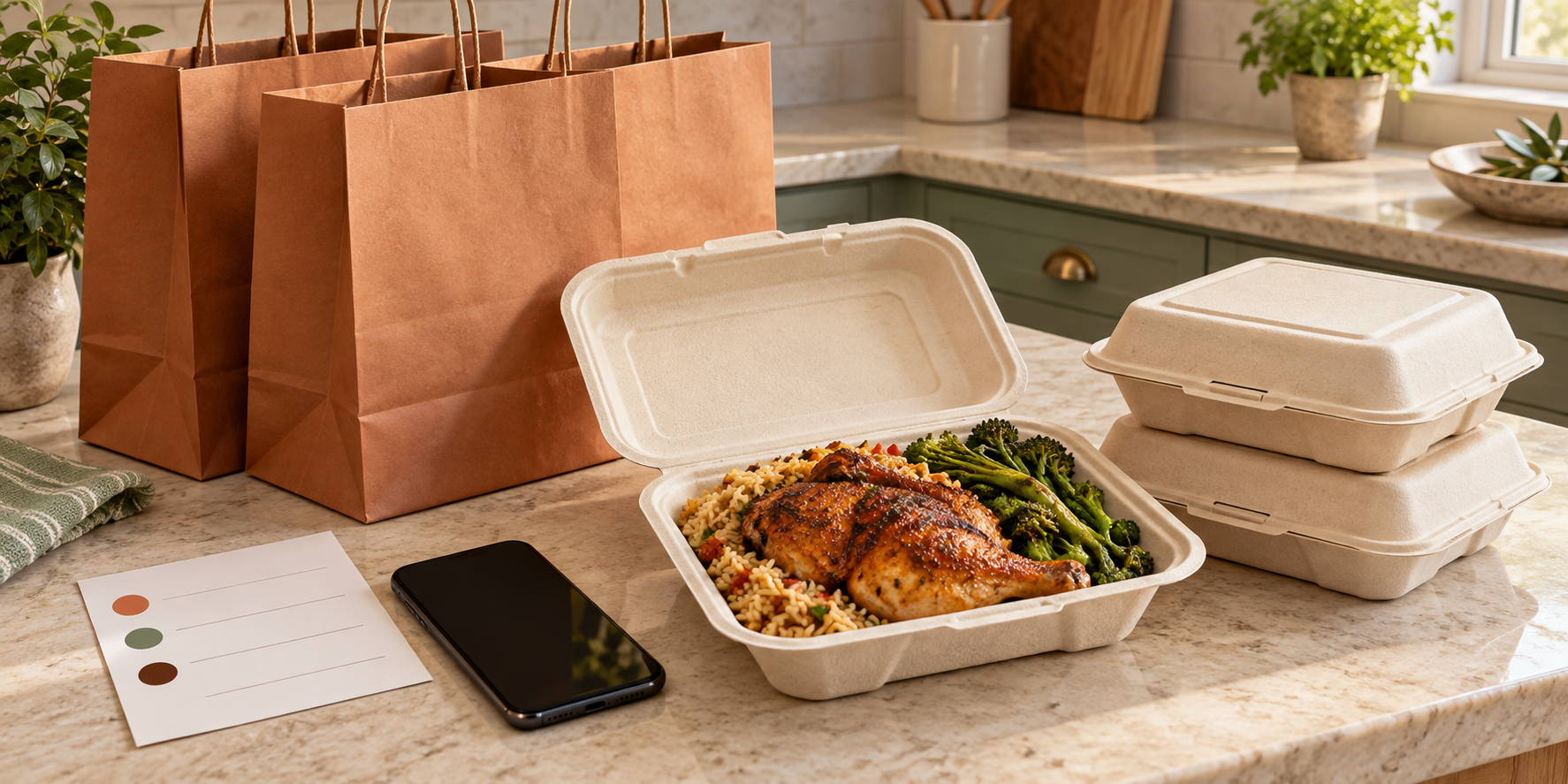
If someone says they are “selling plates,” they usually do not mean that customers can order from a restaurant-sized menu at any hour. They mean a cook is offering a specific prepared meal, in set portions, for a limited sale period. Customers order the plate and collect it—or receive it—during an announced handoff window.
That simple format can make a food idea easier to understand and test. It can also be misunderstood. “Plate sale” is a useful business description, not a license category or permission to sell any meal from any kitchen. This guide explains the model, the parts customers should see, how it differs from nearby food-business formats, and how to decide whether it fits your idea.
A plate sale is a limited offer of complete meals
For this site, a plate sale means a limited-run sale of prepared, portioned meals built around one clearly defined offer. A typical plate might include a main dish, one or two sides, and a sauce or garnish. The seller announces what is included, the price, when orders close, how many are available, and where or when handoff happens.
The word “plate” describes the complete serving, even when the customer receives it in a takeout container. The word “sale” describes a particular drop or service period rather than an always-open menu.
Most plate sales share five traits:
- a focused menu rather than dozens of made-to-order choices;
- a set portion with listed inclusions;
- a defined order window or quantity cap;
- a scheduled pickup or local-delivery window; and
- one production run tied to the confirmed orders.
That combination is the model. The cuisine can vary widely: barbecue with two sides, a rice bowl, a Sunday dinner, a vegan comfort-food plate, or a seasonal special can all use the same structure.
The business model and the legal category are different
“Plate sale” is not one nationwide regulatory classification. Calling an offer a plate sale does not make it a cottage-food product, restaurant, caterer, or permitted home-food operation. Those answers depend on the food, process, facility, location, and sales method.
The FDA says food-business requirements can include different federal, state, and local rules, and it tells home-based sellers to identify the requirements that apply to their specific circumstances. Retail food and food-service oversight is generally handled by state and local authorities. The FDA Food Code is a model that jurisdictions may adopt or modify—not a blanket permit for home meal sales.
Before taking money, use the FDA’s state retail-food directory to find a starting point. Confirm the current local requirements with the responsible state, county, or city authority for your actual address and menu. Be precise: “Can I sell food from home?” may produce a different answer from “May I prepare chicken, rice, and refrigerated sides in this kitchen for prepaid Saturday pickup?”
That legal check sits outside the definition. A plate sale describes how the offer is packaged and sold; the regulator decides which rules and facilities apply.
See the complete customer and seller flow
A plate sale turns one menu idea into a short, visible sequence:
- The seller defines the drop. The post or order page shows the exact meal, included sides, choices, price, order cutoff, payment method, quantity limit, and handoff details.
- The customer claims a portion. They select an allowed option, provide the required contact details, and complete whatever step makes the order confirmed.
- The seller closes the count. Confirmed quantities become the basis for purchasing, production, packaging, and pickup planning.
- The kitchen produces the run. The seller prepares the same controlled offer in repeatable portions rather than responding to unlimited custom requests.
- Orders move through a scheduled handoff. Customers collect during a published window, or approved local deliveries follow a defined route.
- The seller closes the sale. They reconcile fulfilled orders, leftovers, costs, customer issues, and notes for the next drop.
Preorders are common because they let a seller connect the production count to real orders. Current Square preorder guidance illustrates the basic pattern: an item can be ordered before it becomes available, with a future pickup or delivery window and an order cutoff. The model does not require Square—or even an online store—but it does require a reliable way to distinguish interest from a confirmed order.
If you want the operational details, the separate preorder-system guide explains how to control status, capacity, payment, and confirmations.
Understand what a plate sale is not
The boundaries become clearer when you compare the model with nearby formats.
| Format | Typical customer promise | Main difference from a plate sale |
|---|---|---|
| Restaurant service | A broader menu during recurring opening hours | The kitchen stays available for ongoing orders rather than one bounded drop |
| Catering | Food planned for one client’s event or group | The buyer, service scope, quantity, and presentation are usually negotiated as one order |
| Meal-prep subscription | Repeating meals across several days or weeks | The customer buys an ongoing plan rather than a single announced sale |
| Cottage food | A jurisdiction-specific legal route for allowed foods | It is a regulatory category, not another name for any prepared meal |
| Plate sale | A fixed or tightly controlled meal offered for a limited order and handoff period | The seller produces complete portions for individual customer orders in one run |
A seller can operate more than one format, but mixing them inside one offer creates confusion. A Friday plate drop should not quietly turn into a custom birthday order, an open-ended weekly subscription, or an all-day made-to-order menu. Each change affects what the customer expects and what the kitchen must control.
Build the offer around one customer occasion
The most useful plate is not “food everyone will love.” It is a clear answer to a local occasion: Friday dinner after work, Saturday game-day lunch, a meatless Sunday meal, or a comforting holiday special.
The Small Business Administration’s planning guidance recommends examining demand, customer location, competing choices, and what buyers pay for alternatives. Applied to a plate sale, that means asking:
- Who can realistically collect or receive this meal?
- What occasion does it replace or improve?
- Why would they choose this complete plate over cooking, takeout, or another local seller?
- Can the offer be described in one accurate, useful listing?
You do not need a complex research report to get an early signal. Talk to people who match the intended customer, compare local options, and test whether they understand the portion, price, and pickup plan. Compliments about a dish are encouraging; a clear response to a complete offer is more useful.
The menu-item testing guide shows how to move from general praise to a small, controlled customer test.
Work through one simple plate-sale example
Imagine a seller considering a Friday dinner drop. The proposed offer is roasted chicken, seasoned rice, green beans, and a sealed sauce cup. Customers may choose regular or spicy sauce, but the rest of the plate stays fixed.
The menu opens Monday. It states that there are 24 plates, orders close Wednesday at 7 p.m. or when sold out, payment confirms the order, and pickup is Friday between 5:30 and 6:30 p.m. The seller offers three pickup slots so all 24 customers do not arrive together. Current pickup tools can support customer-visible times, cutoffs, advance-order rules, and limits per window, as Square’s pickup-options documentation demonstrates.
After the cutoff, the confirmed count—not likes, comments, or “save me one” messages—controls the production plan. The seller prepares the approved quantity, packs the stated portion, hands off each confirmed order, and records what happened.
The example is intentionally small. It shows the shape of the model without pretending that 24 plates, those times, or that menu will fit every kitchen.
Decide whether the model fits your idea
A plate sale may fit when you can answer yes to these six questions:
- Can you describe one complete meal without a long list of substitutions?
- Is there a specific local customer and occasion for it?
- Can you verify a lawful facility, process, and sales route for that food?
- Can your kitchen repeat the portion within a firm capacity limit?
- Can customers understand how an order becomes confirmed?
- Can you state one realistic pickup or delivery plan before selling?
If the answer is no, the idea may need a different offer or format—not more promotion. A highly customized menu may fit catering better. A shelf-stable packaged product may fit a cottage-food route where local law allows it. A rotating set of weekly meals may be closer to meal prep.
If the answer is yes, the next step is to turn the model into a controlled first sale. Use the full guide to starting a plate sale from home to work through local rules, menu choice, pricing, preorders, production, and a deliberately small launch.
The point of the plate-sale model is not that it removes the work. It gives the work a boundary: one offer, one order count, one production run, and one handoff plan you can review before doing it again.
Ready to move?
Turn the research phase into your first sale.
The guide brings pricing, menu planning, marketing, and setup into one clear playbook.
Get the guide on Gumroad