How to Price Catering Trays for Plate-Sale Orders
Price catering trays with tested pan yields, complete costs, capacity checks, service terms, and a written quote that protects the order.
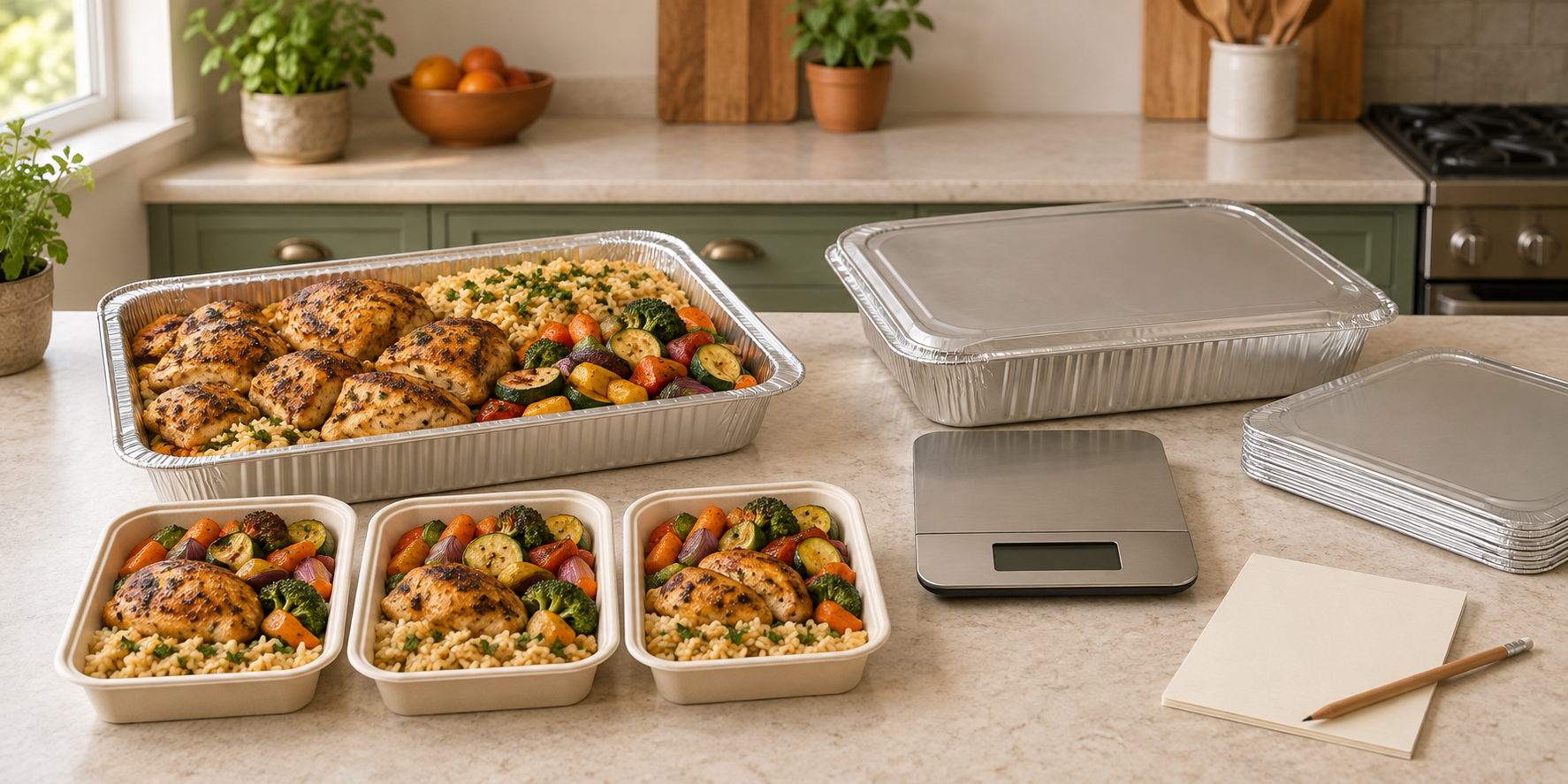
A message asking “How much for a pan?” sounds like a price question, but the pan is still undefined. The customer may mean pickup or delivery, a side or a full meal, a certain tray size, or enough food for a guest count that assumes very different portions. Quoting before those details are fixed turns every later clarification into a cost you did not price.
This guide will help you turn a catering-tray request into a tested serving yield, complete cost, capacity decision, and written quote. You will know exactly what the customer is buying, what the kitchen must produce, and what can still change before the order becomes final.
A quote is not permission to sell a particular food or use a home kitchen for catering. The FDA’s home-food-business overview says requirements vary with the product and facility and directs home-based operators to the responsible federal, state, and local authorities. Confirm the current rules for the food, kitchen, labeling, tax, delivery area, and service model before accepting an order.
Define the tray request before pricing it
Start with a request record, not a price list. Ask the customer for the information that changes the work:
- Event and fulfillment date
- Pickup or delivery, including the location and access details
- Dish and approved choices
- Requested tray size or planned portion count
- Whether you provide serving utensils, racks, fuel, plates, cutlery, or individual containers
- Required arrival or pickup window
- Allergy-related questions that need a separate acceptance decision
- Contact and billing details
Separate food quantity from guest count. “Feeds 20” is not a controlled yield when one event serves the tray as a side and another treats it as the main dish. A more useful specification is “one tray with 12 planned eight-ounce portions,” if that is the yield you actually tested. The customer can then decide whether the portion plan fits the event.
Do not offer every size by default. Start with one dish, one pan, and one fulfillment method your kitchen can repeat. A narrow offer is easier to test, schedule, and price than a custom menu assembled in direct messages.
Prove the tray yield in your own kitchen
The price begins with the amount of finished food the tray reliably holds, not the tray supplier’s outside dimensions. Prepare the exact recipe in the exact pan and equipment you plan to use. Record the finished usable weight or volume, then portion the entire tray with the tool or scale named in the specification.
The USDA recipe standardization guide ties a repeatable yield to repeated testing with the same procedures, equipment, and ingredient quantities and quality. It records yield as finished weight or volume and number of servings, and even treats servings per pan as a useful field. Although the guide is written for school nutrition programs, the operating principle transfers: an untested larger pan is not automatically a standardized version of a smaller recipe.
Use the method from your standardized recipe and portion record:
- Weigh or measure the usable finished food.
- Choose the planned portion by weight, volume, or counted piece.
- Portion the full tray and count complete portions.
- Record the pan, equipment, batch version, and any unsellable remainder.
- Repeat until the result is dependable enough to promise.
The USDA portion-control resource explains that consistent scoops, ladles, and measuring-serving spoons help a recipe produce its expected yield. It also distinguishes volume measures from weight. Write “eight ounces by weight” or “one level six-fluid-ounce ladle,” not simply “one scoop.”
Cost the complete order, not just the food
Build one worksheet for the exact tray specification. Include:
- Ingredients used in the tested recipe, including oil, seasoning, sauce, and garnish
- Tray, fitted lid, seals, labels, and any outer carrier
- Serving utensils, racks, fuel, plates, or individual packages included in the quote
- Shopping, preparation, cooking, portioning, packing, cleanup, and handoff labor
- Delivery mileage, tolls, parking, or approved kitchen rental tied to the order
- Payment-processing cost you expect for the quoted payment method
- A consistent share of overhead
- The profit amount the order needs to contribute
Use quantity and unit cost rather than dropping the entire shopping receipt into one quote. If you buy a case of lids, charge the order for the lids it uses. If the requested dish requires a special ingredient you cannot use elsewhere, include the likely unused amount instead of pretending it has no cost.
University of Nevada, Reno Extension’s standardized-recipe overview connects predictable yield and accurate ingredient measures with food and labor cost forecasts, purchasing, and inventory control. That is why the recipe version and tested tray yield belong on the costing sheet.
Add a capacity gate before adding profit
A profitable-looking tray can still be a bad order if it blocks the weekly sale, exceeds cold storage, or requires three oven cycles during the customer’s pickup window. Put the request into the real production schedule before you approve it.
Check:
- How many tested batches the tray requires
- Whether the pan fits the refrigerator, oven, cooling setup, and carrier
- Which other paid orders need the same equipment
- Whether the food can follow your approved cooking, cooling, holding, and transport process
- How much packing and handoff time the service extras add
- Whether a helper, rental, or separate trip creates a new cost
Decline, resize, or reschedule an order that does not fit. A rush fee cannot create refrigerator space, add an oven, or make an untested batch safe. Charge for real added work only after proving the order remains operationally possible.
Build the tray price with a repeatable method
Keep the arithmetic visible:
ingredients + packaging + labor + fulfillment + payment cost + overhead + profit = quoted price before applicable tax
This expands the site’s basic food-plate pricing method for a larger, customer-specific order. Do not use a competitor’s tray price as proof that your number works. Their portion, ingredient specification, labor, kitchen, tax treatment, and service scope may be different.
You can also divide the final quote by the tested portion count as a reasonableness check. That figure is not necessarily the price of an individual plate; it simply shows what each planned serving contributes to the tray quote. If the result looks unexpectedly low, look for missing labor or packaging. If it looks high, check whether the customer requested delivery, service items, or customization that a basic pickup tray would not include.
Work through one sample tray quote
Suppose a seller has repeatedly tested one pickup tray at 12 planned portions. These figures are an example, not a market rate, serving standard, or profit promise.
| Quote input | Sample amount |
|---|---|
| Ingredients used | $54 |
| Tray, lid, seal, and outer carrier | $8 |
| 3.5 labor hours at a $22 management target | $77 |
| Payment cost estimate | $6 |
| Overhead allocation | $15 |
| Complete planned cost | $160 |
| Chosen profit contribution | $40 |
| Sample pickup quote before applicable tax | $200 |
The sample price works out to about $16.67 per planned portion, but the customer buys the defined tray, not 12 individually packed plates. Delivery, serving supplies, a second flavor, or a new tray size would be separate line items or a revised quote.
After fulfillment, compare the plan with the actual ingredient use, hours, fees, waste, and service cost in your post-sale profit closeout. The next quote should use what happened, not what you hoped would happen.
Write terms the customer can accept
Send a written quote that repeats the complete scope:
- Customer, event, and contact details
- Dish, recipe option, tray count, and tested portion description
- Included packaging, utensils, delivery, setup, or other service
- Fulfillment date, window, and location
- Line-item prices, discounts, fees, and applicable tax treatment
- Deposit or payment schedule and accepted payment method
- Change cutoff, cancellation and refund terms, and seller-cancellation process
- Quote expiration date and acceptance method
Stripe’s current quote workflow describes a quote as a price estimate for requested goods or services with line items, discounts, or taxes. It moves through draft, open, accepted, canceled, or expired states and can become an invoice after acceptance. You can copy that control with any tool: keep the request in draft while details are changing, issue one numbered version, and mark only the accepted version as the production instruction.
Do not invent a universal deposit percentage or call a deposit nonrefundable without checking the law, processor rules, and your ability to apply the term consistently. Choose a payment schedule based on the ingredients, labor, and capacity you commit, then show it before payment. Square’s guidance for canceled food-and-beverage disputes emphasizes clearly disclosed cancellation or refund terms, proof that the customer acknowledged them before purchase, and records of later communications. A written policy does not guarantee a dispute outcome, but it gives both sides the same rule.
When the customer changes the guest plan, dish, quantity, date, or delivery request, revise the quote. Do not edit the accepted scope silently while leaving the old total in place.
Run a final tray-quote check
Before accepting money, confirm:
- The food and service model are currently allowed for your operation.
- The tray uses a tested recipe, pan, equipment setup, and planned portion.
- Every ingredient, package, labor task, service extra, and payment cost is included.
- The order fits the real production, storage, transport, and handoff capacity.
- Worked tax and legal assumptions have been checked for this jurisdiction and sale.
- The quote names what is included and what would trigger a revision.
- Payment, change, cancellation, refund, and expiration terms appear before acceptance.
- The accepted version can feed purchasing, production, packing, and the final closeout.
Start with one tray you already make well. Test its yield, cost the complete pickup order, and create one reusable quote template. The broader Selling Plates guide can help connect that tray offer with your menu, pricing, ordering, and launch plan. A strong catering price is not a guess per pan; it is a promise your kitchen has already proved it can fulfill.
Ready to move?
Turn the research phase into your first sale.
The guide brings pricing, menu planning, marketing, and setup into one clear playbook.
Get the guide on Gumroad